Anyone who has spent time in a truck repair shop knows that equipment failure tends to pick the least convenient moment. Hydraulics behave perfectly for months, only to sag, slip, or groan right when a technician is underneath a raised bed trying to finish a job before the next truck rolls in. It never happens during a slow morning. No, it waits for the busiest hour, the loudest moment, or the day when your best technician is out sick.
Hydraulic systems are impressive, but they are not invincible. They wear down. They leak. They surprise even experienced crews. This is why every shop, regardless of size or specialty, needs a backup safety method that does not rely on pressure, valves, or fluid. A physical support device gives you the stability that hydraulic systems cannot always guarantee.
A proper dump bed safety support system is the difference between a predictable repair environment and a risky one.
Hydraulics Are Designed to Lift, Not to Protect
Hydraulic systems lift heavy beds with impressive strength. That is their job. What they are not designed to do is serve as the only thing preventing a raised body from falling. Hydraulics are built for movement, not fixed support.
Here are some of the most common causes of hydraulic instability:
- Pressure loss due to aging components
- Internal leaks that weaken the lift
- Temperature changes that affect performance
- Worn seals
- Micro cracks in hoses
- Valve drift
None of these issues announce themselves politely. Hydraulics do not send a calendar invite before losing pressure. They simply fail when the right (or wrong) conditions line up.
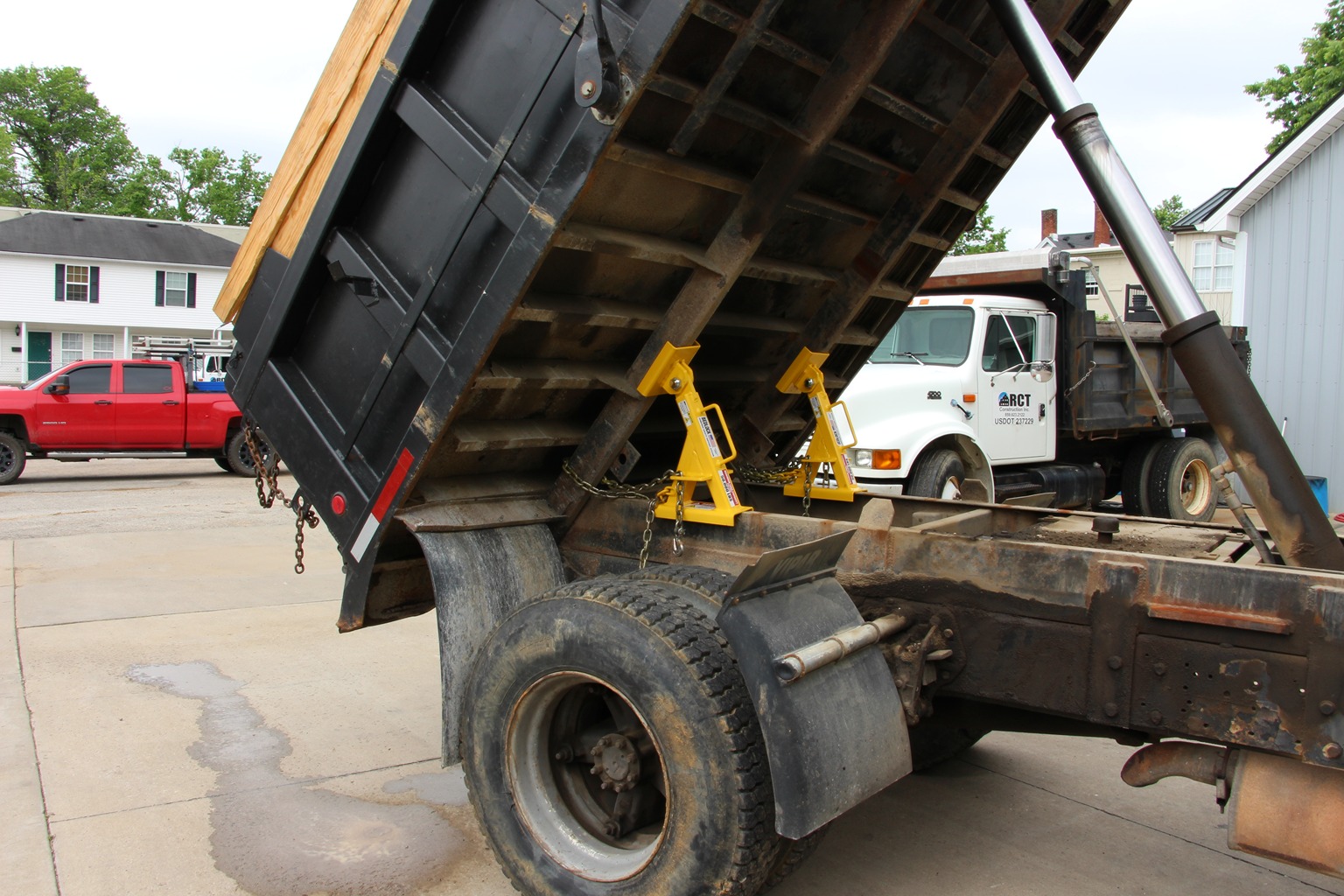
When hydraulics alone are trusted during repairs, even a small drop can shift the bed unexpectedly. A physical prop or a set of dump truck safety stands becomes essential. It brings certainty to a system that otherwise cannot promise consistency.
A Backup Safety System Protects Your Crew From Unexpected Drops
The moment a technician steps under a raised bed, the stakes rise. There is no room for half measures. A falling dump body can cause serious injury in seconds. That risk is not theoretical. It is real, and every long term shop worker has a story about a close call caused by hydraulic quirkiness.
A purpose-built support device does not rely on fluid levels or line pressure. It holds the bed in a fixed position without drifting. If the hydraulics sink, even slightly, the weight transfers to the support instead of onto the technician below.
This is the core reason why a backup system matters. It turns an unpredictable setup into a stable one and allows the crew to focus on repairs, not on what the bed might decide to do next.
A Strong Physical Support Encourages Safer Habits

Human nature plays a role in shop safety. When workers trust their gear, they behave more responsibly. When they do not, they improvise. Improvised solutions are not only unsafe, they become part of shop culture if left unaddressed.
A reliable dump bed safety support system gives technicians confidence that the setup is secure. That confidence creates consistency. Consistency creates safer habits. Safer habits reduce the chance of an accident.
When technicians know exactly where to place the support, how it contacts the frame, and how it locks into position, good routines follow. A backup system simplifies the process, and simplicity keeps workers from cutting corners.
Hydraulic Failure Can Be Silent
One of the biggest misconceptions in repair shops is the idea that hydraulic failure is always dramatic. In reality, many failures are quiet and slow. A technician might not even notice the bed descending until it has already shifted several inches.
Small pressure drops can cause:
- Frame contact to change
- The bed to tilt
- Supports to bind or pinch
- A near miss that no one sees coming
This is why a secondary support is more than a precaution. It is a barrier against slow failure. Even when the hydraulics let the bed drift little by little, the physical support stays firm. It eliminates the problem before it becomes clear to the eye.
Why Improvised Blocks Are Never Enough
Many shops have seen someone reach for a scrap block, a random beam, or a piece of leftover steel to use as a support. It may seem clever in the moment, but these improvised supports are unstable, unpredictable, and structurally unsuitable for the weight of a dump body.
Improvised blocks can:
- Split under load
- Slip on uneven surfaces
- Fail to match the frame profile
- Pinch or shift during repairs
A proper dump truck safety setup solves all of these problems. It is designed for the load, engineered for the angles, and built for repeated use. When a device is purpose built, technicians stop improvising. The safer option becomes the easiest option.
Recommended: BL-700A/B and BL-800A/B BedLock Systems
Backup Supports Protect Workers From Sudden Bed Movement
Even when the hydraulics seem stable, bed movement can occur during tasks like:
- Welding
- Greasing
- Hammering
- Removing corroded parts
- Adjusting suspension components
These tasks cause vibrations. Vibrations cause subtle movement. Subtle movement can cause a shift that becomes dangerous in seconds.
A dedicated safety prop absorbs this risk. It holds the bed in a fixed position no matter what repair activity is happening underneath. Technicians can work freely without wondering if their actions might influence the hydraulics.
A Physical Support System Shows Commitment to Safety
Morale improves when workers feel protected. A shop that prioritizes safety gains trust and respect from its technicians. That leads to better retention, smoother communication, and stronger team culture.
When workers see their employer invest in solid backup systems, they understand that their well being comes before speed. That clarity shapes the entire atmosphere of the shop.
We Help You Strengthen Your Safety Setup
At BedLock Safety Products, we build dump bed safety support systems that give repair shops the reliable backup they need. If you want guidance on choosing the correct support or understanding which options fit your trucks, contact our team today. We will help you choose safety equipment that keeps your crew protected every day.