In busy repair facilities, safety is not just about equipment or procedures—it’s about communication. Clear, consistent communication between team members plays a critical role in preventing accidents, especially when working with heavy-duty vehicles and complex systems. From daily briefings to shift handoffs and digital alerts, strong communication practices ensure that safety standards are understood, followed, and reinforced at every level.
When combined with reliable truck safety equipment, effective team communication becomes a powerful tool for reducing risks and maintaining a safe working environment in dump truck repair shops.
Why Communication Is Essential for Safety
Repair facilities are dynamic environments where multiple technicians often work on the same vehicle at different times. Without proper communication, critical details can be missed, leading to unsafe conditions.
For example, if one technician raises a dump bed and installs truck bed locks, but fails to communicate this to the next shift, there is a risk of improper handling or premature removal. These gaps in communication can lead to serious accidents.
Strong communication ensures that everyone on the team is aware of:
- Current repair status
- Safety measures in place
- Equipment being used
- Potential hazards
This shared awareness reduces confusion and helps maintain consistent safety practices.
The Importance of Daily Safety Briefings
Daily briefings are one of the most effective ways to reinforce safety in repair facilities. These short meetings provide an opportunity to review tasks, highlight risks, and ensure that all technicians are aligned before work begins.
During these briefings, managers can emphasize the importance of using certified dump truck safety equipment and following established protocols. They can also address any issues identified in previous shifts, ensuring that lessons are learned and applied immediately.
Regular briefings create a routine that keeps safety at the forefront of every technician’s mind, reducing the likelihood of oversight or error.
Ensuring Smooth and Safe Shift Handoffs
Shift handoffs are a critical point where communication can either strengthen or weaken safety practices. When one team hands over work to another, it is essential to provide clear and detailed information about the current status of each vehicle.
Effective handoffs should include:
- Work completed and tasks remaining
- Safety equipment in use, such as a dump bed safety support
- Any known issues or risks
- Instructions for the next steps
When technicians clearly communicate the use of truck body props and truck bed locks, the incoming team can continue work safely without making assumptions.
Standardizing handoff procedures ensures that no critical information is overlooked, maintaining continuity and safety across shifts.

Using Digital Alerts to Enhance Awareness
Technology has made it easier than ever to improve communication in repair facilities. Digital alerts and management systems can provide real-time updates on equipment status, maintenance progress, and safety requirements.
For example, alerts can notify technicians when a vehicle requires specific safety measures, such as the use of dump truck bed safety stands during maintenance. These reminders help reinforce protocols and reduce reliance on memory.
Digital tools also allow managers to track compliance, identify patterns, and address potential issues before they lead to accidents. When integrated with reliable truck safety products, these systems create a more proactive approach to safety.
Reducing Miscommunication and Human Error
Miscommunication is a leading cause of workplace incidents. In high-pressure environments, even small misunderstandings can have serious consequences.
By establishing clear communication protocols, repair facilities can minimize these risks. This includes:
- Using standardized terminology
- Documenting all safety measures
- Confirming instructions during handoffs
- Encouraging open communication among team members
When technicians clearly communicate the use of truck repair safety equipment, such as truck bed locks, it ensures that everyone understands the safety measures in place and follows them correctly.
How Communication Supports Equipment Usage
Even the most advanced safety equipment is only effective when used correctly and consistently. Communication plays a key role in ensuring that technicians understand when and how to use dump bed safety support.
For instance, during a briefing, a supervisor can remind the team to use certified truck safety equipment for all maintenance involving raised dump beds. During handoffs, technicians can confirm that the equipment is properly installed and ready for continued use.
This continuous flow of information ensures that safety equipment becomes a standard part of every task, rather than an afterthought.
How BedLock Safety Products Enhances Shop Safety
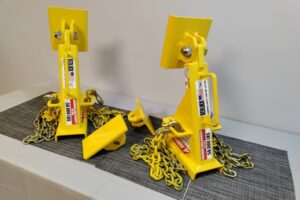
BedLock Safety Products LLC provides a comprehensive range of engineered truck bed locks designed to support safe and efficient maintenance practices in repair facilities. These systems are a critical component of dump truck repair shop safety, offering reliable dump bed safety support that technicians can depend on.
The BL-400 A/B and BL-450 A/B models are ideal for everyday maintenance tasks, providing consistent performance and ease of use. For more demanding applications, the BL-600 A/B model offers enhanced strength and durability, making it suitable for heavier workloads.
Heavy-duty operations benefit from the BL-700 A/B and BL-800 A/B systems, which feature wider bases—7 inches and 8 inches respectively—for maximum stability under large loads. These robust dump truck bed safety stands are designed to perform reliably in high-capacity environments.
For trucks with limited frame access, the BLN-450 A/B Notched BedLock provides a specialized solution. Its custom design allows it to fit around structural obstacles while maintaining dependable performance, ensuring that safety is never compromised.
When combined with strong communication practices, BedLock systems help create a safer, more organized work environment where technicians can perform their tasks with confidence.
By prioritizing both communication and equipment, repair shops can create a safer, more efficient environment where technicians are protected, and operations run smoothly. Explore our products here or contact us for details.