Dump truck maintenance is one of the most demanding and high-risk areas within fleet and repair operations. Technicians routinely work around raised dump beds, hydraulic systems, heavy components, and confined repair spaces where a single mistake can lead to devastating consequences. This is why OSHA regulations and safety procedures play such an essential role in daily maintenance practices.
For repair facilities and fleet managers, compliance is not simply about avoiding citations—it is about creating an environment where workers are protected, and repairs are completed safely and consistently. Proper use of OSHA-compliant truck safety stands, standardized procedures, and dependable physical safety systems can significantly reduce workplace incidents and prevent potentially fatal crushing accidents during bed-up repairs.
Understanding how OSHA standards apply to dump truck maintenance is the first step toward safer operations.
Why OSHA Compliance Matters in Dump Truck Maintenance
The Occupational Safety and Health Administration (OSHA) establishes regulations intended to protect employees from workplace hazards. Heavy-duty repair environments fall directly within OSHA’s focus because technicians are regularly exposed to moving machinery, elevated equipment, hydraulic pressure systems, and suspended loads.
One of the most serious risks in dump truck maintenance involves working beneath a raised dump body. Hydraulic systems can fail unexpectedly due to leaks, pressure loss, damaged components, or accidental activation. Without dependable dump bed safety support, technicians face severe crushing hazards.
OSHA compliance helps reduce these dangers by encouraging employers to identify hazards, implement protective systems, and establish clear maintenance procedures.
Beyond safety, non-compliance can result in:
- Expensive citations and penalties
- Increased workers’ compensation costs
- Operational disruptions
- Legal liability exposure
- Damage to the company’s reputation
Most importantly, compliance failures place lives at risk.
Understanding OSHA’s General Safety Expectations
OSHA does not always issue dump-truck-specific rules for every repair task, but its broader standards and safety principles clearly apply to heavy-duty maintenance.
Several requirements influence repair facility operations, including:
Hazard Assessment and Workplace Risk Evaluation
Employers are expected to identify hazards and implement appropriate safeguards. This includes evaluating raised equipment, suspended loads, hydraulic systems, and technician exposure points.
A raised dump bed represents a recognized hazard requiring proper controls.
Equipment Control and Lockout Procedures
Unexpected movement of machinery is one of OSHA’s major concerns. While lockout/tagout procedures are commonly associated with electrical systems, the principle also applies to hydraulic and mechanical energy sources.
Technicians must ensure that equipment cannot move unexpectedly while maintenance is underway.
Safe Maintenance Practices
OSHA expects employers to maintain safe working conditions and provide reliable truck repair safety equipment capable of protecting workers during service operations.
This includes properly engineered physical supports when employees work beneath elevated equipment.
The Crushing Hazard During Bed-Up Repairs
Few maintenance situations are more dangerous than working beneath a raised dump bed.
Hydraulic lifting systems are designed for movement—not permanent support. Even well-maintained hydraulics can experience:
- Seal failures
- Pressure loss
- Hose deterioration
- Mechanical wear
- Operator error
- Sudden shifting of loads
When technicians rely solely on hydraulics or unstable supports, the risk of collapse increases dramatically.
Fatal crushing accidents often occur because workers assume the hydraulic system alone will hold the load. OSHA investigations repeatedly highlight failures involving suspended equipment that lacked adequate physical support systems.
This is why engineered truck safety equipment is essential during maintenance.
Why Makeshift Supports Create OSHA Problems
Improvised supports remain surprisingly common in some repair facilities. Wooden blocks, metal pipes, jacks, or fabricated braces may appear convenient, but they introduce unacceptable uncertainty.
These makeshift methods create several problems:
- No certified load ratings
- Inconsistent performance
- Potential shifting or collapse
- Lack of repeatable safety standards
- Greater human-error risk
From an OSHA perspective, improvised supports may be difficult to justify because they cannot consistently demonstrate engineered protection.
A safety system should not depend on guesswork.
This is where OSHA-compliant truck safety stands, and engineered support systems provide measurable value.
The Importance of Physical Safety Systems
Administrative procedures and training are important, but procedures alone do not physically stop a raised dump bed from falling.
Physical protection is the final barrier between technicians and serious injury.
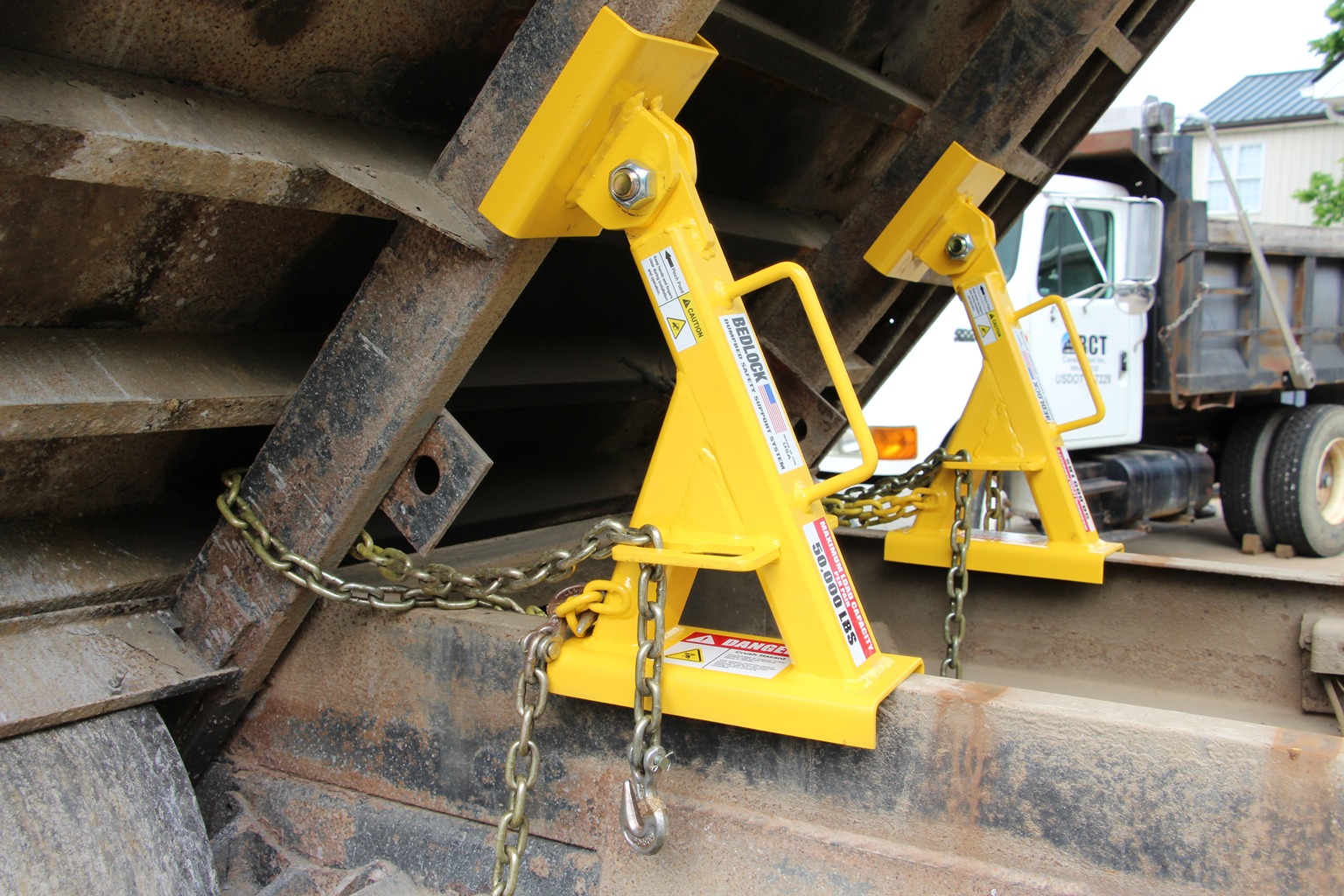
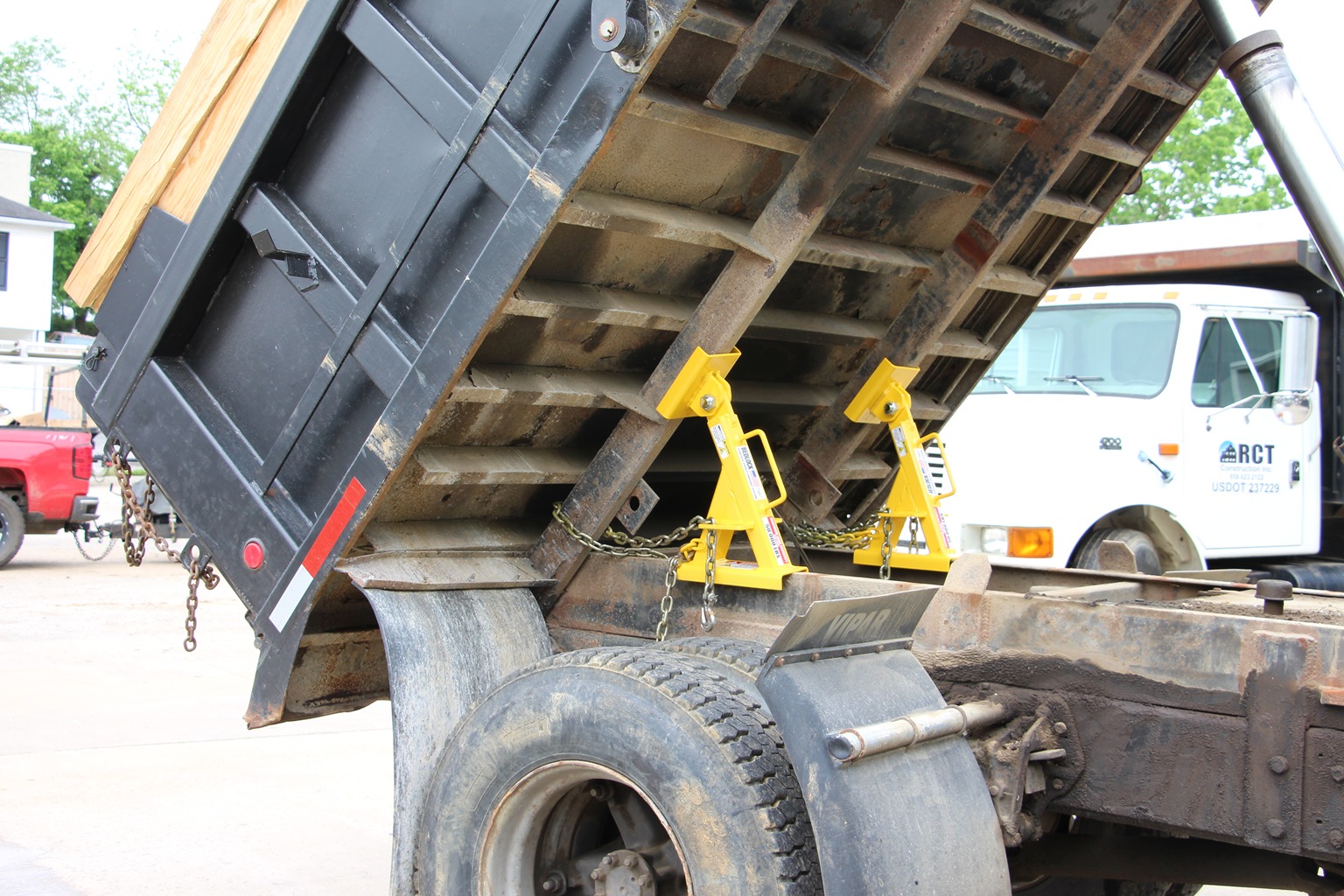
Reliable truck bed locks, dump truck bed safety stands, and engineered support systems provide:
- Stable load support
- Reduced collapse risk
- Consistent safety practices
- Greater technician confidence
- Improved maintenance control
When combined with proper inspections and training, physical systems strengthen compliance and improve overall workplace safety.
How BedLock Safety Products Supports OSHA-Aligned Safety Practices
BedLock Safety Products LLC provides engineered systems specifically developed to address the challenges of raised-bed maintenance.
Unlike improvised methods, BedLock systems are purpose-built truck safety products designed to provide dependable dump bed safety support during repairs.
Their product line supports a wide range of maintenance environments.
BL-400 A/B and BL-450 A/B
These systems are commonly used for standard maintenance operations and everyday repair procedures.
The BL-450 A/B offers dependable stabilization while maintaining straightforward deployment for busy repair facilities.
BL-600 A/B and BL-650 A/B
For heavier repair applications, these models provide additional structural strength and durability.
They are particularly valuable for fleets handling larger equipment and more demanding service work.
BL-700 A/B and BL-800 A/B
Heavy-duty fleets require enhanced capacity and broader support surfaces.
The BL-700 A/B features a 7-inch base while the BL-800 A/B includes an 8-inch base, delivering increased stability for larger dump truck configurations and higher-load environments.
These systems help facilities strengthen maintenance safety and reinforce consistent repair procedures.
BLN-450 A/B – The Notched BedLock
Certain trucks include welded or bolted frame components that limit installation access.
The BLN-450 A/B Notched BedLock addresses this challenge through a shortened base plate and reinforced design, allowing safe use even in restricted frame conditions.
This specialized configuration helps maintain dependable support without compromising safety.
Training and Compliance Must Work Together
Even the best equipment requires proper implementation.
Repair facilities should establish safety programs that include:
- Pre-repair inspections
- Hazard communication
- Lockout procedures
- Equipment-use training
- Routine safety reviews
- Consistent support-system usage
Training reinforces expectations, but engineered truck bed locks ensure those expectations are physically supported.
When technicians understand procedures and have dependable tools available, compliance becomes easier to sustain.
Reducing Liability and Building a Safer Operation
OSHA compliance is often viewed through the lens of enforcement and penalties, but its larger purpose is prevention.
Safe maintenance programs help organizations:
- Reduce incident rates
- Protect employees
- Minimize downtime
- Improve operational consistency
- Lower long-term costs
Companies that prioritize engineered safety systems demonstrate a stronger commitment to workforce protection and operational responsibility.
This commitment often strengthens technician morale and improves workplace culture as well.
Dump truck maintenance presents serious hazards that demand more than good intentions. Hydraulic systems, elevated beds, and heavy components require structured procedures and dependable physical safeguards.
Using OSHA-compliant truck safety stands, standardized maintenance protocols, and engineered truck safety equipment helps facilities strengthen compliance and, more importantly, protect lives.
BedLock Safety Products LLC supports these goals by providing purpose-built truck bed locks that help reduce crushing risks and promote safer bed-up repairs.
Protect your technicians with dependable and professional truck safety equipment. Explore BedLock Safety Products or contact our team today for expert recommendations and freight pricing tailored to your fleet needs.