High-volume maintenance environments operate under constant pressure. Municipal fleets, construction companies, and commercial operators all depend on fast turnaround times to keep vehicles productive and service schedules on track. At the same time, every repair performed beneath a raised dump body carries significant risk that cannot be reduced or ignored.
The challenge is not choosing between speed and safety. The real challenge is ensuring that commercial truck service safety practices are efficient enough to be consistently followed without creating operational bottlenecks.
When safety procedures become too slow or complicated, technicians naturally begin looking for shortcuts. Those shortcuts are where risk enters the system.
The Conflict Between Speed and Safety in Modern Workshops
In busy service facilities, technicians often manage multiple repairs under strict deadlines. Vehicles are queued, supervisors are tracking completion times, and downtime directly impacts operational costs.
Within this environment, safety procedures can unintentionally become a source of friction.
Common pressure points include:
- Time-consuming setup procedures
- Complex equipment positioning requirements
- Multiple steps before work can begin
- Limited technician availability
- High daily repair volume
When processes slow down workflow, the risk of procedural bypass increases.
This is why efficiency and safety must be designed together rather than treated as separate priorities.
Why Slow Safety Systems Increase Risk Instead of Reducing It
Safety systems are only effective when they are used consistently. If a process takes too long or requires multiple technicians, it becomes more likely that it will be skipped or rushed.
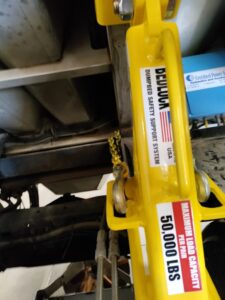
In high-volume environments focused on dump truck maintenance safety equipment, the gap between policy and practice is often created by inefficiency rather than intent.
When safety tools are difficult to deploy, technicians may:
- Delay installation
- Improperly position equipment
- Rely on partial support methods
- Skip verification steps
- Depend on experience instead of procedure
Each of these behaviors increases exposure to serious incidents, particularly when working under elevated dump bodies.
The Reality of High-Throughput Maintenance Environments
Commercial service centers are not controlled, slow-paced environments. They are fast-moving systems where efficiency directly impacts profitability and fleet readiness.
In truck bed lock applications, this means safety systems must integrate seamlessly into daily workflows without interrupting productivity.
A system that slows down workflow may unintentionally discourage compliance, even when safety awareness is high.
The goal is not to reduce safety standards but to ensure they can realistically be followed under operational pressure.
Making Safety Part of the Workflow, Not a Separate Step
In effective maintenance operations, safety should not feel like an additional task. It should feel like part of the workflow itself.
Proper use of dump bed safety support systems helps integrate stability procedures into routine maintenance without unnecessary delays.
When safety becomes intuitive and quick, technicians are far more likely to apply it consistently across all repair scenarios.
This reduces variability and strengthens overall shop safety culture.
Why Complexity Leads to Corner Cutting
One of the most common issues in fleet maintenance environments is procedural complexity.
If a safety process involves:
- Multiple components
- Extended setup time
- Difficult positioning
- Coordination between multiple workers
It increases the likelihood of shortcuts.
In dump body safety prop usage scenarios, even small deviations from proper procedure can create unstable conditions beneath raised dump bodies.
Corner-cutting does not usually happen due to negligence. It happens due to pressure, time constraints, and system inefficiencies.
This is why simplifying safe behavior is often more effective than enforcing stricter rules.
The Importance of Fast Deployment in Safety Systems
In modern workshops, time efficiency directly influences safety compliance.
Systems used in dump body safety stand applications must be quick to install, easy to verify, and reliable under repeated use.
When deployment takes under a minute, it removes one of the most common barriers to compliance: perceived inconvenience.
Technicians are more likely to consistently use systems that do not interrupt workflow momentum.
Reducing Setup Friction Improves Compliance
In dump box safety stands environments, reducing setup friction leads to better adherence to safety procedures.
Friction can include:
- Excessive installation steps
- Need for multiple personnel
- Complicated adjustment processes
- Unclear positioning requirements
When these barriers are removed, safety becomes automatic rather than optional.
This improves both consistency and accountability across the entire maintenance team.
Efficiency Without Compromising Structural Control
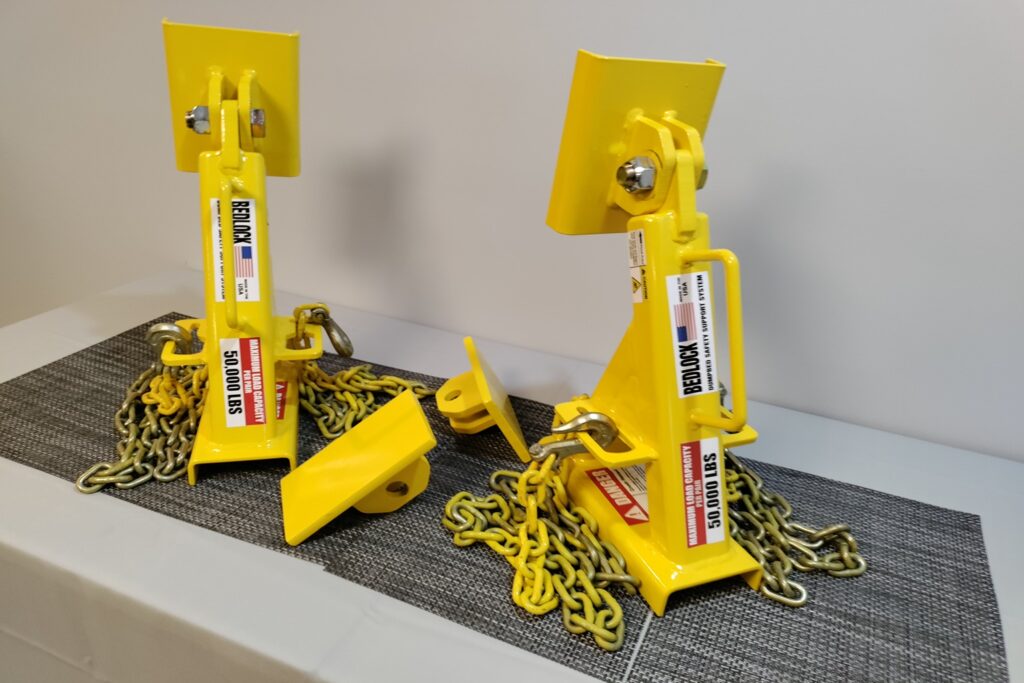
Speed alone is not enough. Safety systems must still provide reliable structural support under load.
In dump truck bed safety stand applications, the balance between quick installation and stable performance is critical.
A system that installs quickly but lacks structural integrity introduces unacceptable risk. Conversely, a system that is strong but slow to deploy may not be used consistently.
The ideal solution achieves both efficiency and stability simultaneously.
Eliminating Secondary Steps in Safety Procedures
One of the most significant improvements in modern maintenance safety design is the elimination of unnecessary secondary steps.
In dump truck box safety stand usage, removing secondary tie-downs or additional securing processes helps streamline workflow without reducing protection.
When fewer steps are required, there are fewer opportunities for error.
This simplification supports consistent use across all technicians, regardless of experience level.
Building Safer Habits Through Repeatable Processes
Consistency is the foundation of dump truck safety programs.
When a safety process is:
- Fast
- Simple
- Repeatable
- Predictable
It becomes a habit rather than a decision.
Habit-driven safety reduces reliance on individual judgment during high-pressure situations. This is especially important in environments where multiple vehicles are serviced daily.
Manufacturer Responsibility in High-Performance Safety Systems
A professional dump truck safety equipment manufacturer must understand the demands of commercial service environments.
Equipment must be engineered not only for strength, but also for usability under real operational pressure.
If a system is too complex or time-consuming, it will not be used consistently.
Partner With BedLock Safety Products LLC
Commercial service environments require safety systems that support both speed and protection without compromise.
Since 2021, BedLock Safety Products LLC has focused on helping fleets and maintenance facilities improve commercial truck service safety by designing solutions that prioritize fast, simple, and repeatable use in real-world shop conditions.
If your facility is struggling to balance throughput with maintenance safety demands, contact BedLock Safety Products LLC to discuss how your operation can improve workflow efficiency while maintaining strong safety standards across all dump body service procedures.
Because in high-volume maintenance environments, the safest system is the one that gets used every single time—without slowing the shop down.