Running one repair facility well is hard enough. Running several, and getting them to operate the same way, is a different challenge entirely. Safety leaders overseeing multiple locations often discover that a policy that works perfectly at one site quietly falls apart at another, not because anyone is careless, but because consistency across locations rarely happens on its own. Building real multi-location maintenance safety takes deliberate structure, not just a shared handbook.
Why Consistency Breaks Down Across Multiple Repair Locations
Every location develops its own habits. Different site managers, different technician tenure, different equipment vintages, and different local vendors all pull operations in slightly different directions over time. None of this happens out of neglect. It happens because, without active coordination, each facility naturally solves problems its own way.
A few warning signs tend to show up before consistency fully breaks down:
- One location logs inspections meticulously while another treats them as optional
- Technicians transferring between sites need to relearn basic procedures
- Incident rates vary widely between locations doing similar work
- Equipment purchasing decisions are made locally with no oversight
The organizations that manage this well tend to treat consistency as an ongoing leadership function rather than a one-time policy rollout. OSHA’s Recommended Practices for Safety and Health Programs frame this well, identifying management leadership and communication and coordination as two of the core elements of an effective program, elements that matter even more once an organization operates across multiple sites.
Policy Enforcement: Why a Written Standard Isn’t the Same as a Followed One
A written safety policy only becomes real when it’s consistently enforced. Without regular verification, policies tend to drift toward whatever is most convenient at each individual site.
Effective policy enforcement across multiple locations usually includes:
- A single, centrally maintained policy document rather than site-specific versions
- Scheduled reviews, not just a one-time rollout at onboarding
- A clear escalation path when a site deviates from standard procedure
- Documentation showing that reviews and corrections actually happened
Facilities that skip the documentation step often find that even a well-enforced policy is difficult to prove during an audit or investigation, since verbal enforcement alone leaves no record behind.
Standardizing Technician Training From Site to Site
Training is one of the most common places where multi-location maintenance safety quietly breaks down. A technician trained at one facility may receive a different depth of instruction than a peer at another site, even if both are technically “trained” on the same equipment.
Standardized training typically includes a shared curriculum, consistent hands-on evaluation criteria, and a documented method for verifying competency rather than just attendance. When training content and standards are set centrally, and then delivered locally, technicians across every site start from the same baseline understanding of how equipment should be used, regardless of which facility onboarded them or how long ago.
This matters most when technicians move between locations, whether temporarily to cover a staffing gap or permanently through a transfer. A technician who learned dump box safety stand procedures one way at their original site shouldn’t have to guess at a different facility’s expectations.
Equipment Selection: The Quiet Driver of Multi-Location Maintenance Safety
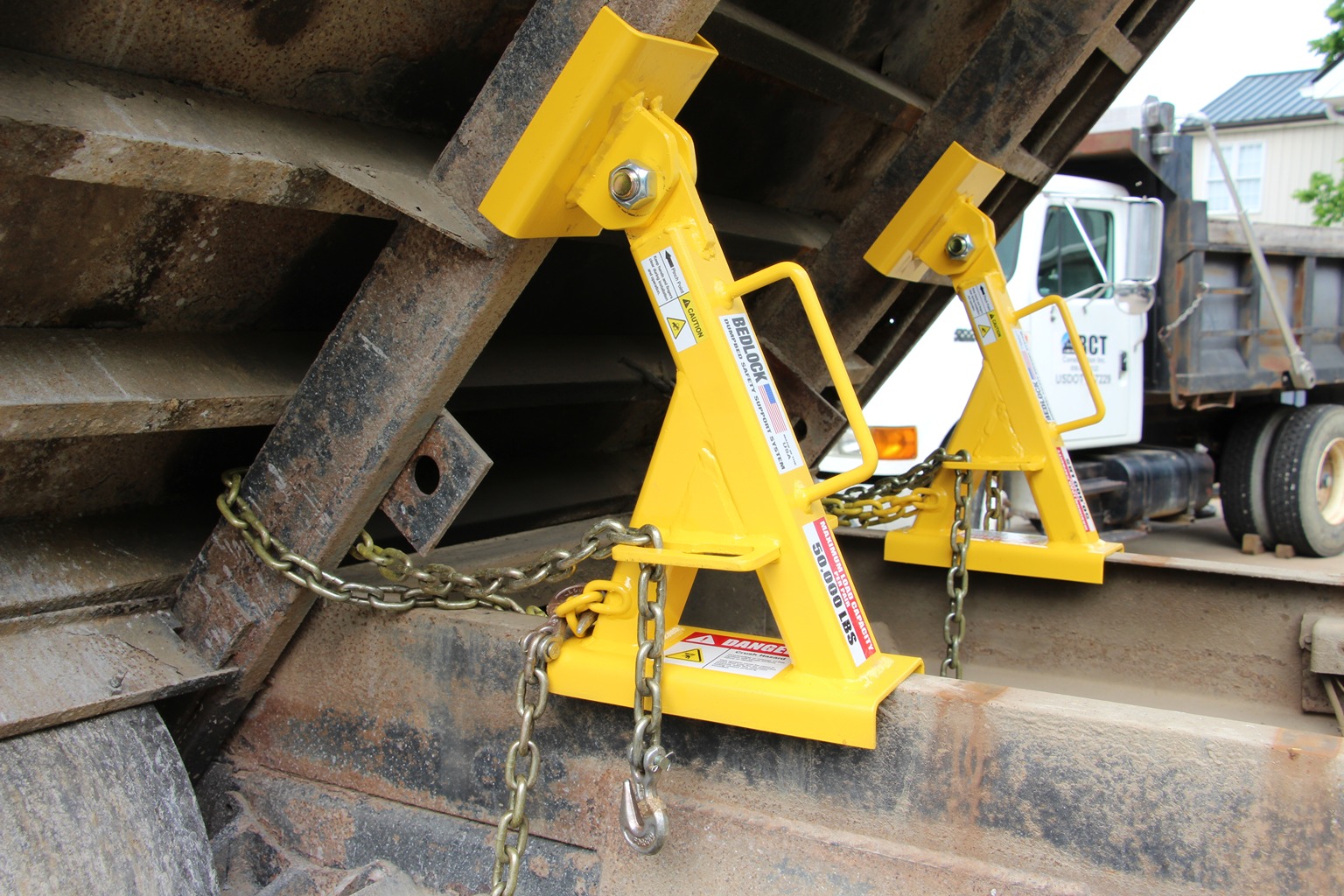
Few things undermine consistency faster than each location sourcing its own safety equipment independently. When one facility uses a dependable dump truck safety lock system, and another relies on mismatched or improvised supports, the organization no longer has one safety standard. It has several, and the weakest one determines the organization’s actual risk exposure.
Standardizing equipment selection across locations offers a few clear advantages:
- Technicians moving between sites already know how the equipment works
- Training materials apply uniformly, without site-specific exceptions
- Replacement parts and specifications stay consistent
- Inspection and maintenance criteria can be applied the same way everywhere
International frameworks like ISO 45001 reflect this same principle, encouraging organizations to standardize health and safety practices across every part of the business rather than managing each location as its own separate system.
Performance Monitoring That Actually Surfaces Drift Between Locations
Consistency isn’t something to assume once it’s built. It has to be measured. Without structured monitoring, one location can quietly drift away from standard practice for months before anyone notices, often only after an incident forces the issue.
Useful performance monitoring typically compares inspection frequency, incident rates, and dump truck safety stands or bracing equipment usage across every site side by side, rather than reviewing each facility in isolation. OSHA’s recordkeeping framework, which requires organizations to link incidents to specific establishments, supports exactly this kind of cross-location comparison when the data is tracked consistently.
Building a Repeatable Safety Program Across Every Site
Consistency across multiple repair locations isn’t achieved through a single memo or training session. It’s built through centrally set policies, standardized training, uniform equipment selection, and monitoring that compares performance across sites rather than treating each one as its own island.
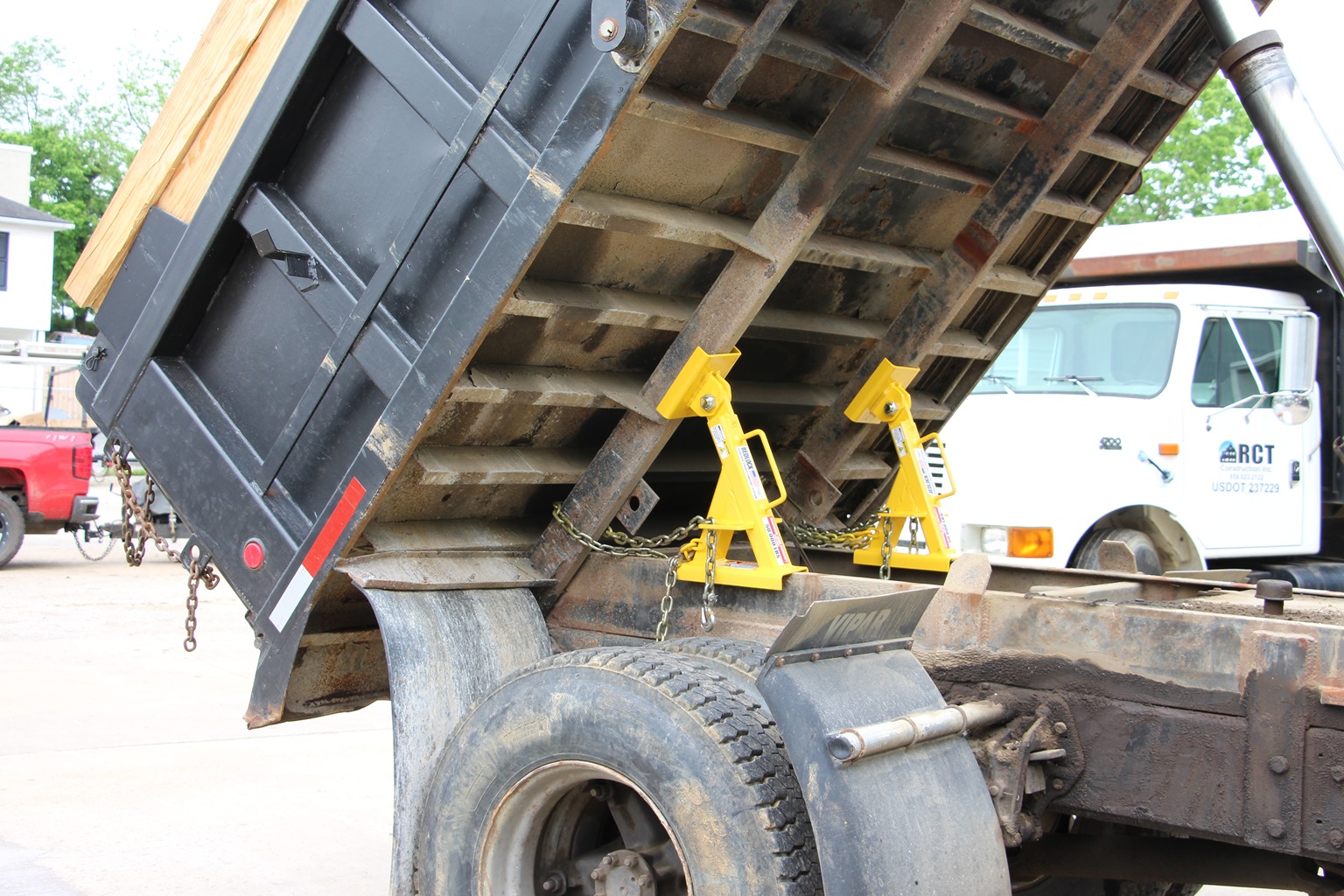
As a truck repair safety equipment manufacturer, we work with organizations managing multiple maintenance locations and help ensure every site is equipped with the same dependable, load-rated systems, so that safety standards don’t vary depending on which facility a technician happens to be working in that day.
This kind of dump truck safety consistency also makes it easier for leadership to evaluate performance across the organization, since every site is being measured against the same baseline rather than a locally defined version of “acceptable.”
Contact BedLock Safety Products
If your organization is working to standardize safety equipment across multiple repair locations, our team can help you select consistent solutions for every site and provide freight guidance for multi-location orders. Call 217-553-0963 or send us a message to get started.