Modern repair facilities are under increasing pressure to improve efficiency while maintaining the highest safety standards. One of the most effective ways to achieve both is through predictive maintenance. By using data, inspection logs, and reliable truck safety equipment, repair shops can identify potential issues before they lead to failures, accidents, or costly downtime.
Predictive maintenance shifts the focus from reactive repairs to proactive prevention. Instead of waiting for a problem to occur, technicians and managers can anticipate risks and take action early—creating a safer and more controlled working environment.
What Is Predictive Maintenance?
Predictive maintenance uses data analysis, inspection records, and monitoring tools to determine when equipment or components are likely to fail. This approach allows maintenance teams to schedule repairs at the right time, avoiding unexpected breakdowns.
In repair facilities, predictive maintenance can include:
- Tracking wear and tear on vehicle components
- Monitoring hydraulic systems and load conditions
- Maintaining detailed inspection logs
- Identifying patterns in recurring maintenance issues
When combined with proper truck repair safety equipment, this approach significantly reduces the risk of accidents caused by equipment failure.
Reducing Unexpected Failures in the Shop
Unexpected failures are one of the biggest safety risks in any repair facility. A sudden hydraulic failure or unstable load can create dangerous conditions for technicians working under or around heavy vehicles.
Predictive maintenance helps prevent these situations by identifying warning signs early. For example, if inspection logs show irregularities in a dump truck’s hydraulic system, repairs can be scheduled before the issue becomes critical.
However, even with predictive insights, physical safety measures remain essential. Using dependable dump bed safety support ensures that technicians are protected in case of unexpected changes during maintenance.
The Role of Inspection Logs and Data Tracking
Accurate inspection logs are the backbone of any predictive maintenance program. These records provide valuable insights into equipment performance, helping teams detect trends and potential risks.
By consistently documenting:
- Equipment condition
- Maintenance history
- Safety checks and procedures
repair facilities can make informed decisions that improve both safety and efficiency.
For example, if logs indicate inconsistent use of dump truck bed safety stands, managers can address the issue through training or process improvements. This ensures that safety protocols are followed consistently across all operations.
Enhancing Technician Awareness and Preparedness
Predictive maintenance doesn’t just improve equipment reliability—it also enhances technician awareness. When workers have access to data about potential risks, they can approach tasks with greater caution and preparedness.
This is particularly important when working with raised dump beds. Knowing that a system may be under stress encourages technicians to rely on certified truck bed locks.
This proactive mindset reduces the likelihood of accidents and supports a stronger safety culture within the facility.
Combining Predictive Tools with Physical Safety Equipment
While predictive maintenance provides valuable insights, it cannot replace the need for physical safety equipment. Data can identify risks, but only proper dump truck safety equipment can physically prevent accidents.
For instance, even if a hydraulic system appears stable, there is always a risk of sudden failure. This is why using reliable dump bed safety support, such as engineered locking systems, is critical during maintenance.
The combination of predictive tools and certified truck repair safety equipment creates a layered safety approach:
- Data identifies potential risks
- Equipment provides immediate physical protection
- Procedures ensure consistent application
Together, these elements form a comprehensive safety strategy.
Improving Workflow Efficiency and Reducing Downtime
Predictive maintenance also contributes to more efficient workflows. By scheduling repairs in advance, facilities can avoid unexpected disruptions and better manage their workload.
This planning ensures that technicians have the time and resources needed to follow proper safety procedures, including the use of truck body props and truck bed locks.
In high-volume repair environments, this level of organization reduces stress, improves productivity, and minimizes the chances of rushed or unsafe decisions.
How BedLock Safety Products Supports Predictive Safety Strategies
BedLock Safety Products LLC provides a full range of engineered truck bed locks designed to support safe and efficient maintenance practices. These systems play a critical role in any predictive maintenance strategy by providing reliable dump bed safety support during inspections and repairs.
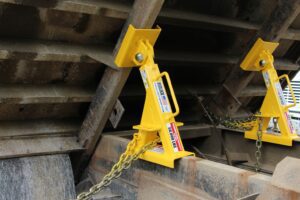
The BL-400 A/B and BL-450 A/B models offer dependable solutions for standard applications, ensuring consistent performance in everyday maintenance tasks. For more demanding environments, the BL-600 A/B and BL-650 A/B systems provide enhanced strength and stability.
Heavy-duty operations benefit from the BL-700 A/B and BL-800 A/B models, which feature wider bases—7 inches and 8 inches, respectively—for maximum support under larger loads. These robust dump truck bed safety stands are ideal for facilities handling high-capacity vehicles.
For trucks with limited frame access, the BLN-450 A/B Notched BedLock offers a specialized solution. Its unique design allows it to fit around structural obstacles while maintaining reliable performance, making it an essential part of modern truck safety equipment.
By integrating our systems into predictive maintenance programs, repair facilities can ensure that safety measures are always in place—regardless of what the data reveals.
Building a Safer, More Proactive Repair Environment
Predictive maintenance is more than a technical upgrade—it’s a shift in mindset. It encourages repair facilities to anticipate problems, plan ahead, and prioritize safety at every stage of the maintenance process.
When combined with reliable truck safety equipment, this approach creates a safer, more efficient environment where technicians can perform their work with confidence.
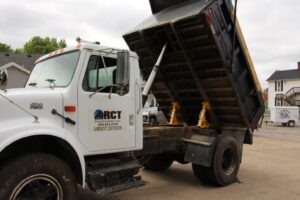
Predictive maintenance enhances shop safety by identifying risks before they become failures, improving planning, and supporting better decision-making. However, data alone is not enough. Reliable dump truck safety equipment and certified truck bed locks are essential for providing the physical protection technicians need during maintenance.
By combining predictive tools with our dependable dump bed safety support, repair facilities can reduce accidents, improve efficiency, and build a stronger, more proactive safety culture.
Reach out to us for a consultation or explore our products here.