A great truck technician needs more than a toolbox, a diagnostic scanner, and the ability to identify a strange noise from three bays away.
Today’s heavy-duty repair environment demands a much broader skill set. Trucks are becoming more technologically complex, repair procedures continue to evolve, and repair shops are dealing with persistent technician shortages. At the same time, safety cannot become the topic that gets squeezed into the final five minutes of a Friday meeting.
Training the next generation of technicians means teaching them how to repair vehicles while also preparing them to recognize hazards, evaluate equipment, follow established procedures, and make sound decisions before a repair begins.
For shops working with dump trucks and other heavy equipment, that preparation can make a significant difference.
Why Technician Training Needs a New Approach
The heavy-duty repair industry is facing a workforce challenge that makes effective training more important than ever. Fullbay’s 2026 heavy-duty repair research reported that 54% of shops surveyed were understaffed, while only 60% had formal training programs.
That creates a difficult equation. Experienced technicians have valuable knowledge to pass along, but there are fewer people available to provide that instruction while keeping the shop moving.
Meanwhile, the vehicles themselves are becoming more complicated. Maintenance research from NACFE highlights growing demands around newer powertrains, electronic systems, specialized tools, technician training, and continuing education.
The answer is not simply adding more hours to a training calendar. The goal should be building practical skills technicians can apply every time they enter a repair bay.
Safety Skills Every New Technician Should Develop
- Hazard Recognition Before Wrench Time
Before beginning a repair, technicians should be able to identify potential sources of stored energy, unexpected movement, pinch points, unstable components, fluid hazards, and electrical risks.
The habit is simple: stop and assess the work area before starting the work.
What could move? What is supporting the component? Could something shift when another component is removed? Is the equipment being used actually suitable for the application?
Those questions take seconds to ask and can prevent a great deal of trouble.
- Equipment Selection With Purpose
Safety equipment should never be selected simply because it is available.
Technicians need to understand equipment ratings, dimensions, frame sizes, vehicle configurations, clearance limitations, and intended applications. This is particularly important when selecting support equipment for raised dump bodies.
A dump bed safety support system that works for one truck may not be appropriate for another. Training should therefore teach technicians to verify specifications rather than rely on appearance, habit, or the ever-dangerous phrase, “That’s what we usually use.”
- Proper Support for Raised Dump Bodies
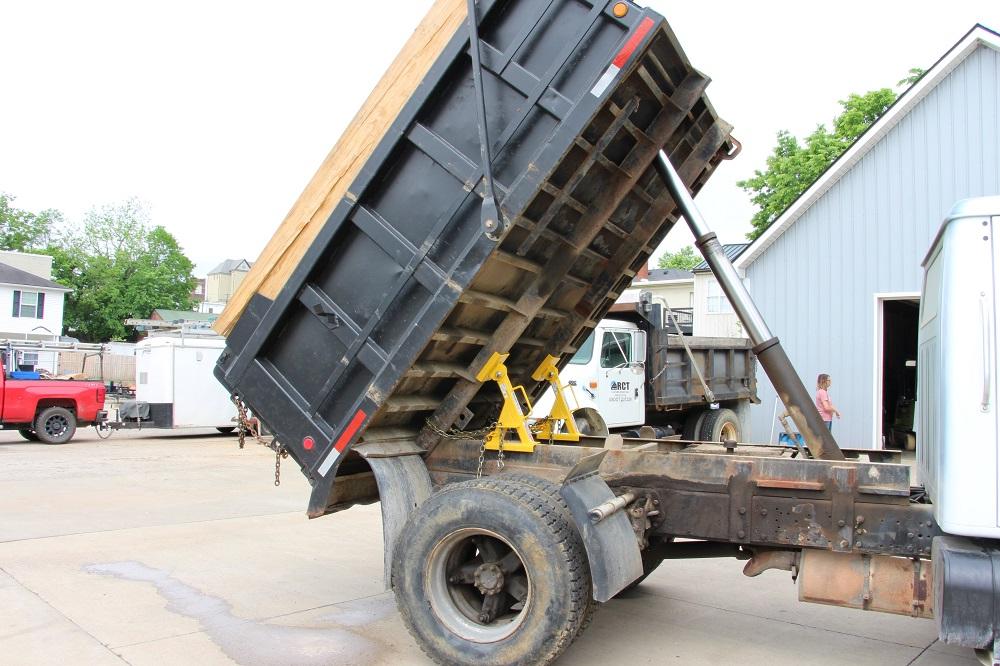
Working beneath a raised dump body requires careful preparation. Technicians should understand when additional support is required and how the appropriate support system should be positioned and used.
This is a core part of dump truck repair safety. Hydraulic systems and other vehicle components should not automatically be treated as the only means of support during repair work.
Training should establish clear procedures for inspecting support equipment, confirming compatibility, positioning it correctly, and checking the setup before work begins.
Inspection Should Be a Skill, Not a Formality
Technicians are trained to inspect trucks for problems. That same attention should extend to the equipment used to make repairs possible.
Before equipment is used, technicians should know how to check for visible damage, excessive wear, deformation, corrosion, compromised welds, missing parts, or other conditions that could affect suitability.
Before the Job: Inspect support equipment before putting it into service. If something looks questionable, stop and report it rather than assuming it will be fine.
During the Job: Pay attention to anything that changes. An unexpected movement, fit issue, clearance problem, or equipment concern should be treated as information that requires action.
After the Job: Equipment should be returned to its proper storage location, and damage or concerns should be documented and communicated.
That creates accountability and prevents a known problem from quietly becoming the next technician’s problem.
Communication Belongs in the Safety Program
A technically skilled technician can still create risk if important information is not communicated.
Training should cover communication between technicians, supervisors, service personnel, and anyone else working around the repair area.
If a truck has unusual frame dimensions, limited clearance, damaged equipment, or a repair procedure requiring additional precautions, that information needs to reach the people who need it.
Communication is also how experience gets passed from one generation to the next. Experienced technicians should explain not only what they are doing, but why.
That “why” can be more valuable than another page in a training manual.
Standard Procedures Reduce Guesswork
When technicians approach the same safety-sensitive task in completely different ways, consistency becomes difficult.
Written procedures provide a common starting point for:
- Repair-bay preparation
- Equipment inspections
- Vehicle positioning
- Support placement
- Pre-repair safety checks
- Post-job equipment checks
- Reporting damaged or unsuitable equipment
Standardization does not mean taking judgment away from experienced technicians. It gives everyone a baseline that helps reduce avoidable variation.
NACFE’s maintenance research similarly points to the importance of appropriate tools, facilities, technician education, and ongoing training as vehicles and repair requirements become more complex.
Hands-On Training Makes the Difference
A technician can read a procedure perfectly and still struggle when faced with an unfamiliar truck configuration.
That is why hands-on training matters.
Technicians should have opportunities to practice equipment inspections, identify hazards, select suitable support equipment, and prepare a repair area under realistic conditions. Practical instruction allows supervisors to identify gaps that may never appear during classroom training.
The 2026 ASE Training Managers Council survey also points to continued demand for technician training as the industry responds to changing technical requirements.
For newer technicians, hands-on experience also helps build confidence without requiring them to learn every lesson the hard way.
Safety Training Should Keep Evolving
The strongest repair-shop training programs do not treat safety as a one-time orientation.
They reinforce it through refresher training, mentoring, equipment inspections, documented procedures, toolbox discussions, and regular feedback.
That matters because the equipment technicians work on is changing. A technician may work on a traditional diesel truck in one bay and a vehicle packed with electronic systems in the next. The technology may differ, but preparation, hazard recognition, proper equipment selection, and communication remain essential.
Keep Procedures Current: When equipment, vehicles, or repair methods change, training materials should change too.
Encourage Questions: New technicians should feel comfortable asking why a particular procedure or support system is required.
Learn From Near Misses: A situation that almost caused a problem can provide valuable training without waiting for an actual incident.
Pair Experience With Structure: Experienced technicians bring practical knowledge. Written procedures provide consistency. Strong programs use both.
Building a Safer Future for Heavy-Duty Repair
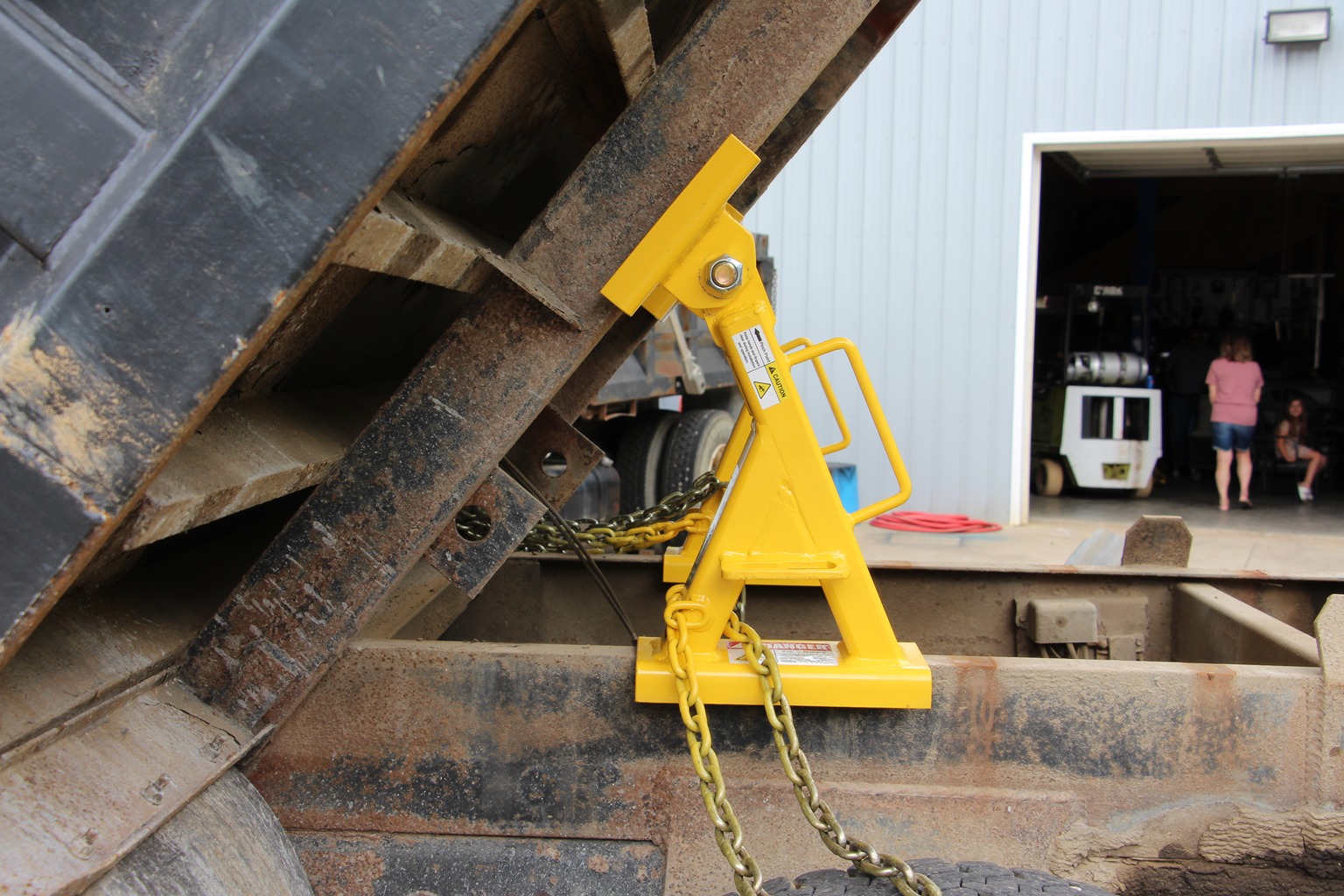
At BedLock Safety Products, LLC, we believe safe repair work starts with preparation. We provide truck repair safety equipment designed for applicable repair-shop work, including support systems for raised dump beds.
But equipment is only one piece of the equation. Technicians also need the knowledge to recognize hazards, understand equipment requirements, follow procedures, and make informed decisions before work begins.
That is why we value opportunities to connect with professionals who are focused on preparedness and safety. We will be exhibiting at Disasters Expo 2026 in Houston, Texas, on October 14-15 at Booth 740, where we look forward to meeting fleet, maintenance, emergency management, and industry professionals.
Whether your shop is training new technicians, reviewing its safety procedures, or evaluating support equipment for raised dump beds, contact us at BedLock Safety Products, LLC to discuss your application and find the appropriate system for your needs.