Dump truck repair often requires access to areas around the frame, dump body, hydraulic components, air systems, and other equipment mounted beneath or beside the body. In many trucks, standard support equipment can be positioned without difficulty. However, some configurations have components that restrict access to the frame or interfere with the base of a conventional support.
This is where a notched BedLock can be useful.
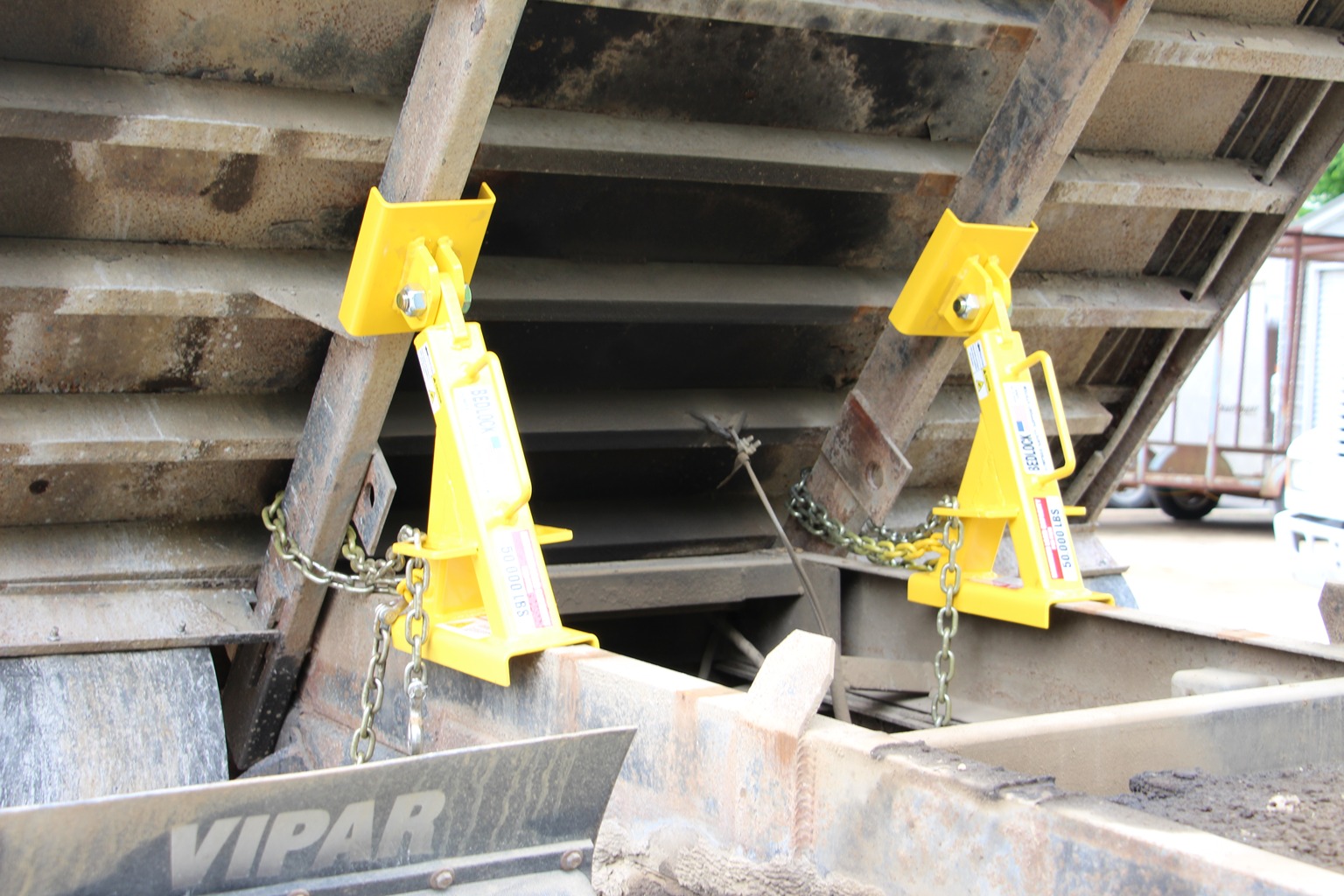
The BLN-450A/B Notched BedLock is a made-to-order support configuration designed for trucks where mounted equipment or other structural components limit normal frame access. Its modified base plate and reinforced support arrangement allow the BedLock System to accommodate certain clearance restrictions that may prevent the use of a standard configuration.
Understanding when a notched configuration is appropriate starts with evaluating the actual truck rather than selecting equipment based only on its general size or type.
What Is a Notched BedLock?
A Notched BedLock is a modified BedLock configuration designed for applications where the standard base-plate arrangement cannot be positioned properly because of nearby components.
The BLN-450A/B Notched BedLock has a shortened base-plate side and reinforced supports. This configuration is made to order based on the requirements of the specific truck and application.
A notched configuration may be considered when:
- A battery box restricts access to part of the frame.
- An air tank is positioned close to the intended support location.
- Brackets or other mounted equipment interfere with standard positioning.
- The available frame area does not provide sufficient clearance for a conventional configuration.
- The truck’s chassis layout creates an unusual obstruction around the support area.
The purpose is not to modify the truck to accommodate the support. Instead, the support configuration is selected around the existing truck layout.
When Should a Dump Truck Be Considered for a Notched BedLock?
A dump truck may require a notched configuration when the repair team cannot position a standard BedLock correctly because of an obstruction.
Before choosing a support, inspect the actual installation area and identify what is limiting access.
| Condition | Standard BedLock Consideration | Notched BedLock Consideration |
| Clear access to the frame | Standard configuration may be appropriate
|
Usually unnecessary |
| Battery box near the frame | May restrict positioning
|
May be appropriate |
| Air tank near the support location
|
Check available clearance
|
May be appropriate |
| Mounted brackets or equipment | Measure obstruction carefully | May accommodate limited access
|
| Narrow or restricted installation area | Confirm support contact area | Consider a made-to-order configuration
|
| Different chassis arrangement | Measure the specific truck | Discuss application with manufacturer
|
A notched BedLock should not be selected simply because a truck is older, larger, or used frequently for repairs. The deciding factor is the physical configuration of the truck and the available support location.
What Should Repair Teams Inspect Before Selecting a Notched BedLock?
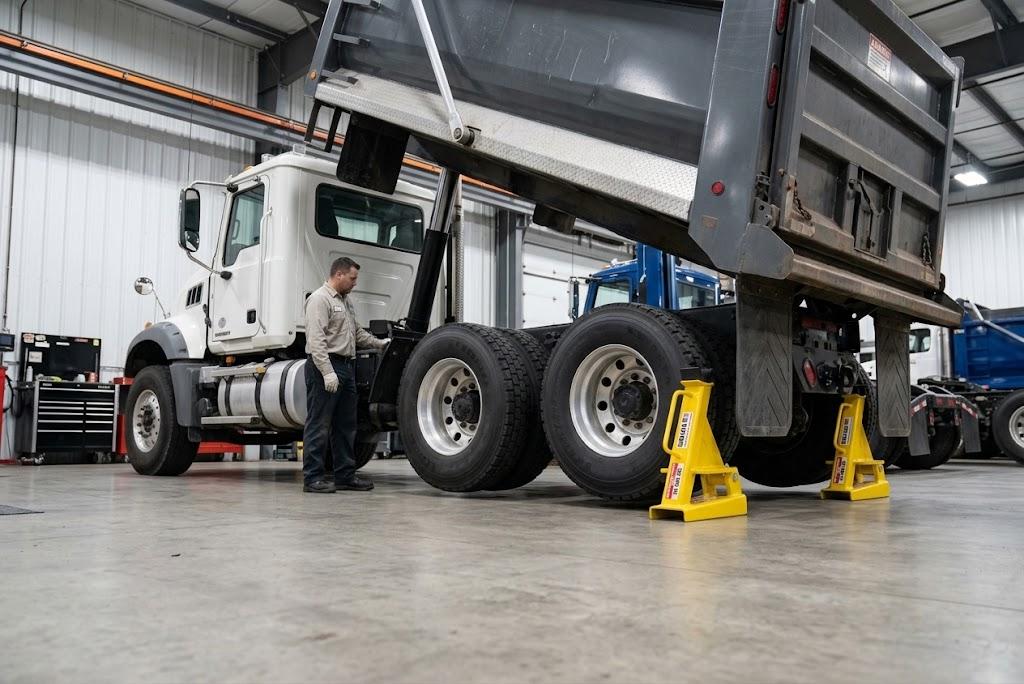
A proper assessment should begin with the truck itself. Measurements and clearance conditions can vary between models, even when two trucks perform similar hauling duties.
1. Frame Width
Measure the frame at the intended support location. Do not rely only on the truck’s model or general specifications.
The BLN-450A/B is based on the 4.5-inch frame application associated with the BL-450 configuration. The actual frame dimensions should be confirmed before selecting the appropriate system.
2. Frame Access
Look at how much of the frame is accessible around the proposed support point.
Check for:
- Battery boxes
- Air tanks
- Hydraulic components
- Brackets
- Crossmembers
- Hoses and lines
- Electrical components
- Other permanently mounted equipment
The objective is to identify whether the standard base-plate arrangement can be positioned correctly.
3. Clearance Around the Support Location
Measure the available space rather than assuming there is enough room.
Consider both the horizontal and vertical clearance around the frame. An obstruction that appears minor from a distance may prevent the support from sitting in its intended position.
4. Contact Area
The support must engage the appropriate structural area of the truck. If an obstruction prevents proper contact, forcing a standard support into place is not an appropriate solution.
This is one of the main situations where a made-to-order notched configuration may need to be considered.
5. Dump Body and Chassis Configuration
The dump body, frame, suspension, and mounted equipment should be assessed together.
A repair team should not select support equipment based solely on the dump body’s dimensions. The chassis layout and available access points are equally important.
Why Can Mounted Equipment Create a Problem?
Dump trucks often have additional components installed around the frame for their specific operating and service requirements. Battery boxes, air tanks, brackets, and other equipment can occupy space that would otherwise be available for support equipment.
This can become particularly relevant during maintenance when technicians need access to areas beneath or around the raised dump body.
OSHA requirements recognize the need for positive support when raised dump bodies are being maintained or inspected. The specific support arrangement should also account for the truck manufacturer’s procedures and the physical configuration of the vehicle.
A support that cannot be positioned correctly because of an obstruction does not solve the access problem. The installation area needs to be evaluated first.
Standard BedLock or Notched BedLock: Which Should You Use?
The choice should be based on the truck’s actual configuration.
A standard BedLock may be appropriate when:
- The frame is readily accessible.
- There are no significant obstructions around the intended support location.
- The standard base-plate arrangement can be positioned correctly.
- The frame dimensions fall within the applicable BedLock specifications.
A Notched BedLock may be appropriate when:
- A battery box limits frame access.
- An air tank occupies part of the available installation area.
- A bracket or mounted component interferes with standard positioning.
- The truck requires a shortened base-plate side to accommodate its configuration.
- A standard support cannot be positioned without interfering with existing equipment.
The decision should be made after measuring the truck and identifying the specific clearance limitation.
What Other BedLock Options Are Available?
Not every application requires a notched configuration. BedLock Safety Products offers different systems for different frame sizes and applications.
For example, the BL-450A/B is commonly used with single- and tandem-axle dump trucks and is designed for frames up to 4.5 inches wide. The A top uses a channel-style configuration, while the B top uses a flat plate.
For applications involving wider frames, the BL-600A/B is designed for frames up to 6 inches wide and is commonly used with larger dump trailers and roll-off applications, while the BL-700B is designed for frames up to 7 inches wide.
This distinction is important because frame width and access conditions are separate considerations. A truck may have the correct frame width for a standard system but still require a modified configuration because of an obstruction.
Key Questions to Ask Before Ordering a Notched BedLock
Repair shops and fleet maintenance teams should have the following information available when discussing a specialized application:
- What is the frame width at the intended support location?
- Where is the support expected to contact the frame?
- What equipment is mounted near that location?
- Is a battery box, air tank, bracket, or other component restricting access?
- How much clearance is available around the frame?
- What type of dump body and chassis are involved?
- Is the application for repair or maintenance work?
- Does the truck require a standard or modified support configuration?
Providing these details help the manufacturer evaluate the application rather than relying on assumptions based on truck type alone.
Notched BedLock Configurations Are Application-Specific
A notched support is not a universal replacement for a standard BedLock. It is intended for situations where the truck’s configuration creates a specific access limitation.
The BLN-450A/B is made to order because the reason for the modification comes from the individual vehicle’s layout. This makes accurate measurements and clear information about the truck particularly important.
It is also important to remember that BedLock Systems are intended for dump body maintenance and repair applications in a repair shop. They are not intended for supporting dump bodies during cargo hauling or normal on-road operation.
Choose the Right Configuration for Your Truck
Selecting dump body support equipment should begin with the actual truck, not simply the truck’s make, model, or axle configuration. Frame dimensions, mounted components, clearance, and the intended support location all influence which configuration is appropriate.
At BedLock Safety Products, LLC, we manufacture support equipment for dump truck repair and maintenance applications, including made-to-order configurations for trucks with restricted frame access.
If you are unsure whether a standard BedLock or Notched BedLock is appropriate, contact our team with your vehicle, frame dimensions, and application details. We can review the configuration and recommend the appropriate BedLock System, along with a firm freight cost.
Get in touch with us today.