Choosing dump truck safety equipment is not simply a matter of picking the largest or smallest support available. Frame dimensions can vary between trucks, trailers, and roll-offs, while attached components can affect how much access is available around the frame. Measuring the vehicle first helps repair teams identify equipment that matches the actual application.
For shops servicing different vehicle types, understanding these dimensions can make equipment selection more precise and help avoid choosing a support that does not work with the vehicle’s configuration.
Why Does Frame Width Matter When Selecting Support Equipment?
Frame width is one of the first specifications to check because support equipment is designed to work within a particular dimensional range. A support intended for a narrower frame may not be appropriate for a wider chassis, while selecting based only on vehicle type can overlook important differences between individual models.
For example, at BedLock Safety Products, LLC, we offer several configurations based on frame width:
- BL-450A/B:Designed for frames up to 4.5 inches wide.
- BL-600A/B:Designed for frames up to 6 inches wide and commonly used with larger dump trailers and roll-offs.
- BL-700B:Designed for frames up to 7 inches wide and commonly used for trailer applications.
The correct choice should be based on the actual frame and application rather than assuming that trucks in the same category have identical dimensions.
What Should You Measure Before Choosing Dump Truck Safety Equipment?
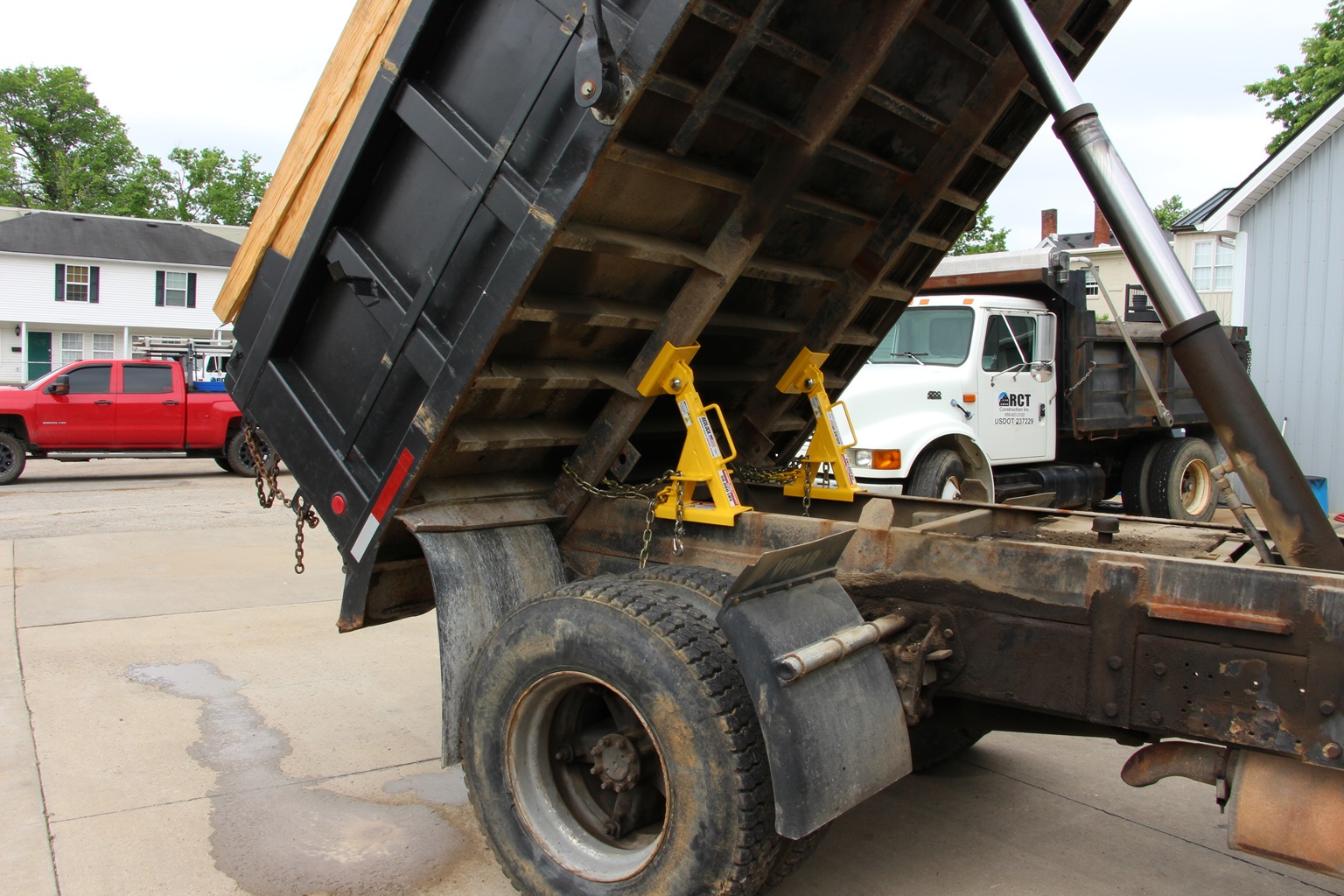
Frame width is important, but it is not the only measurement that can affect compatibility. Before selecting truck repair safety equipment, repair teams should check the area where the support will actually interface with the vehicle.
Check These Dimensions and Conditions
- Frame width:Measure the frame at the intended support location.
- Frame profile:Check the shape and configuration of the frame, not just its width.
- Attachment points:Look for brackets, tanks, battery boxes, or other components that restrict access.
- Vertical clearance:Confirm that surrounding components will not interfere with the support.
- Body contact area:Check where the raised dump body will interface with the support.
- Top configuration:Determine whether a channel-style or flat-top configuration is appropriate.
- Vehicle variations:Measure different truck or trailer models instead of assuming fleet-wide dimensions are identical.
These details become particularly important when a standard support cannot access the intended frame area. BedLock offers a BLN-450A/B Notched BedLock as a made-to-order option for applications where mounted equipment such as battery boxes, air tanks, or brackets limits normal frame access.
How Do Truck and Trailer Configurations Affect Selection?
The same frame-width measurement can have different implications depending on the vehicle configuration. A single-axle dump truck, tandem-axle truck, dump trailer, and roll-off may present different access points and surrounding components.
NIOSH guidance on dump truck hazards specifically recommends using a safety support or brace when working beneath a raised truck bed and following the manufacturer’s maintenance procedures.
This is why repair teams should evaluate the complete application instead of selecting equipment based solely on a vehicle’s make, model, or general classification.
For example, the BL-450A/B may suit compatible applications with frames up to 4.5 inches wide, while the BL-600A/B provides an option for applications with frames up to 6 inches wide. The BL-600A/B is commonly used with larger dump trailers and roll-offs, including refuse and recycling applications.
A Quick Selection Check
Before choosing a support, ask:
- What is the measured frame width?
- Where will the support interface with the vehicle?
- Is the frame area accessible?
- Are there welded or bolted attachments in the way?
- Which top configuration matches the application?
- Does the selected equipment meet the manufacturer’s specifications?
What If a Standard Size Does Not Fit?
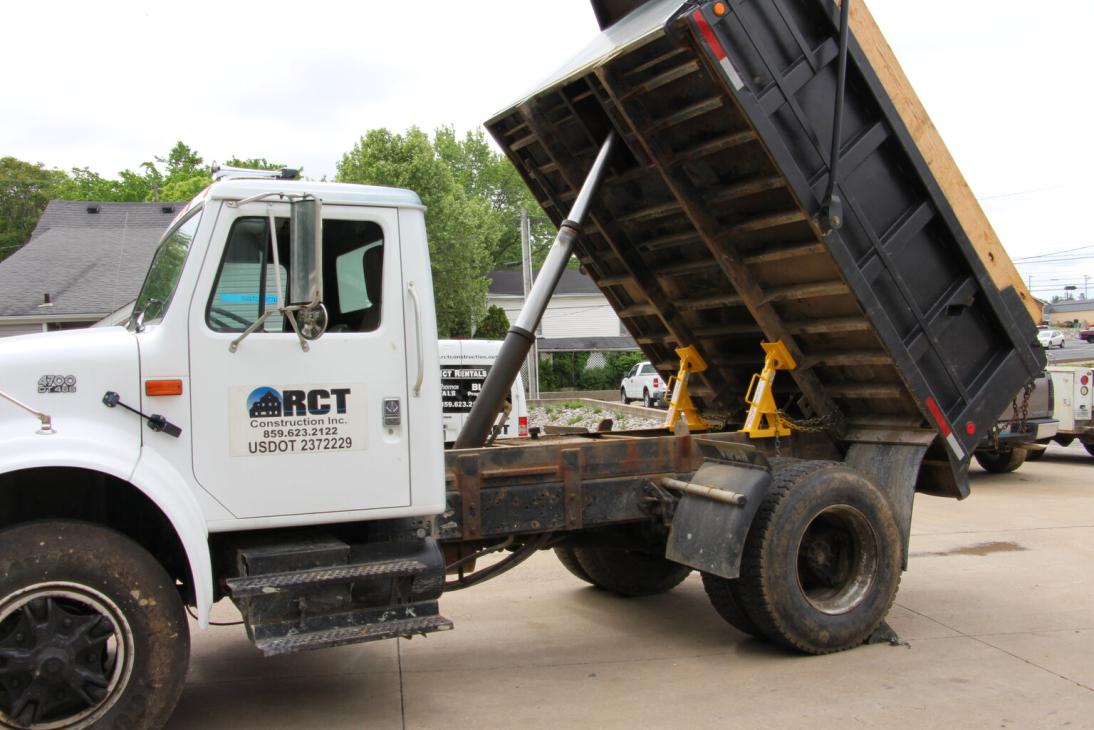
Not every vehicle will provide a straightforward installation point. Equipment mounted around the chassis can create clearance limitations even when the frame itself falls within a standard size range.
That is where a custom configuration can be useful. Rather than modifying a standard support after purchase, repair professionals can provide the vehicle’s specific dimensions and application details when discussing a custom option.
At BedLock Safety Products, LLC, we can help repair professionals identify an appropriate dump truck safety brace or support configuration based on the vehicle’s frame dimensions and application. Our team can review details such as frame width, vehicle type, and clearance limitations to recommend the appropriate BedLock System.
Choose Dump Truck Safety Equipment Based on the Actual Application
Frame size provides an important starting point, but proper selection also depends on access, clearance, body configuration, and the support’s specifications. Taking these factors into account can help repair facilities choose dump truck safety equipment that matches the vehicles they actually service.
At BedLock Safety Products, LLC, we manufacture truck repair safety equipment for dump truck, trailer, and roll-off maintenance applications. Contact us with your vehicle and frame details, and we can recommend the appropriate BedLock System and provide a firm freight cost before you place an order.