At first glance, servicing a single-axle dump truck and a tandem-axle dump truck may seem fairly similar. Both use a dump body, hydraulic components, a truck frame, and other systems that require regular inspection and maintenance. However, the axle configuration can affect how the truck is built, how components are arranged, and what repair teams need to consider before beginning service work.
For shops that work on multiple dump truck configurations, these differences matter when planning a repair and selecting dump truck safety equipment. The goal is not to assume that one support configuration works for every truck, but to evaluate the actual vehicle, frame, body, and maintenance application.
How Are Single-Axle and Tandem-Axle Dump Trucks Different?
The most obvious difference is the number of rear axles. A single-axle dump truck has one rear axle, while a tandem-axle configuration has two rear axles positioned relatively close together.
That difference affects more than the appearance of the chassis. Tandem-axle trucks are commonly built for applications requiring greater payload or more substantial chassis configurations, while single-axle trucks may be selected where maneuverability, size, or operating requirements make a smaller configuration more appropriate.
From a repair perspective, the important point is that the axle configuration can influence the arrangement of components around the frame and under the dump body.
What Can Change Between the Two Configurations?
Repair teams may encounter differences in:
- Frame layout:The chassis may have different dimensions or component placement.
- Suspension components:Axle and suspension arrangements can change the working area underneath the truck.
- Brake systems:Additional axle components can mean additional service points.
- Hydraulic routing:Hoses and lines may be positioned differently depending on the truck configuration.
- Body dimensions:Dump body size and mounting arrangements can vary.
- Access points:Components around the frame can affect where technicians can work and where support equipment can interface.
These differences do not mean that every tandem-axle truck requires one particular type of equipment. Instead, they reinforce the need to evaluate each vehicle’s actual configuration.
Does Axle Configuration Change How You Approach Dump Body Maintenance?
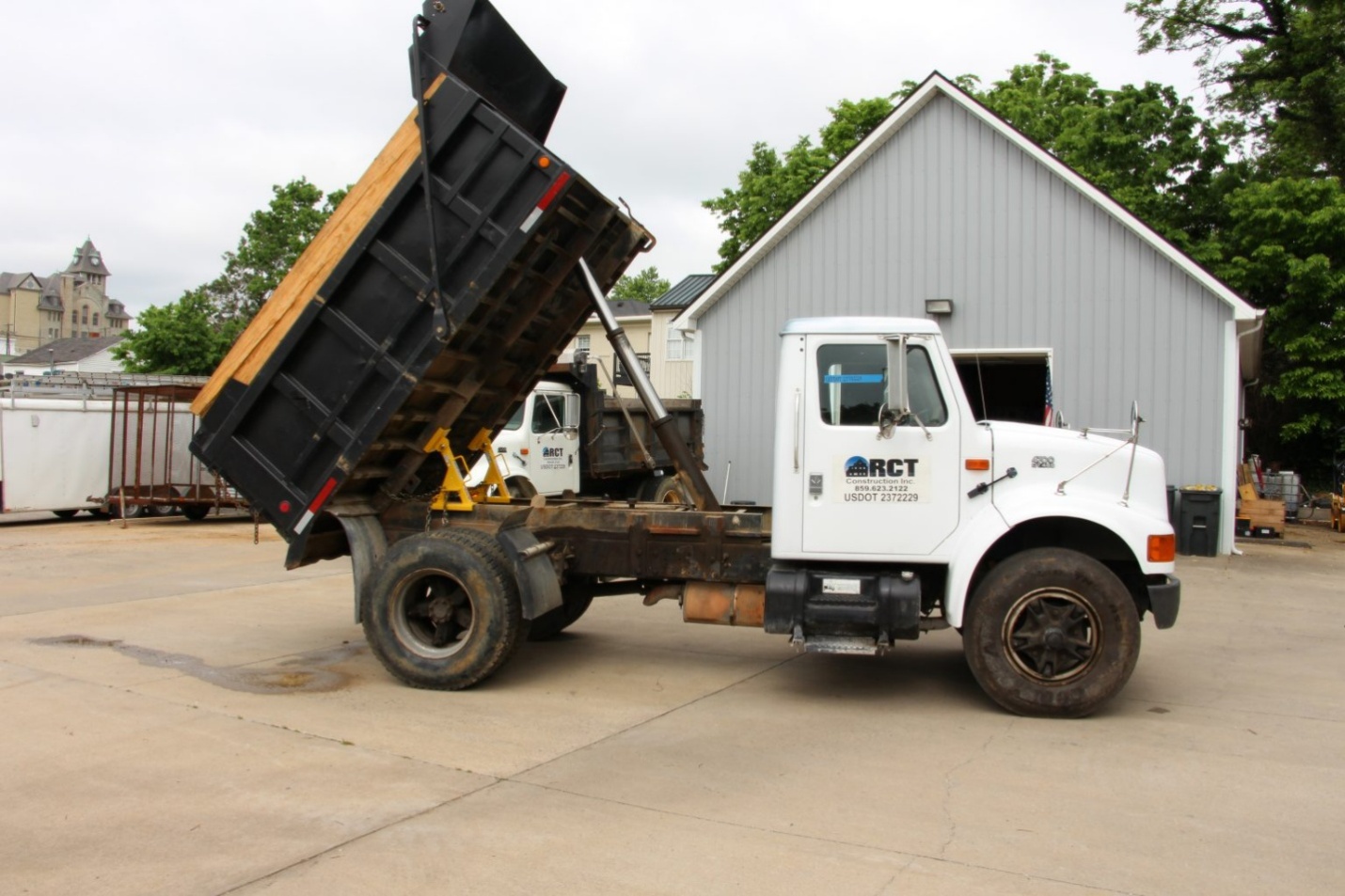
It can.
When technicians need to inspect or repair components beneath a raised dump body, the truck’s overall configuration becomes important. The location of the axles, suspension components, hydraulic lines, tanks, brackets, and other equipment can influence access to the work area.
OSHA’s construction standard states that trucks with dump bodies must have a positive means of support that is permanently attached and capable of being locked in position to prevent accidental lowering of the body during maintenance or inspection.
OSHA has also warned that makeshift supports such as loose wooden blocks or unsecured steel members can shift during maintenance. Its guidance recommends strong, heavy, positive supports designed for the application.
That makes the support system part of the repair planning process, rather than something to consider after the truck is already in the bay.
What Should Repair Teams Check Before Selecting Support Equipment?
The axle configuration is useful information, but it should not be the only factor used to select truck repair safety equipment.
Before choosing a support system, technicians or shop managers should look at the actual truck and verify several specifications.
A Quick Pre-Service Check
- Axle configuration:Identify whether the truck is single-axle or tandem-axle.
- Frame width:Measure the frame at the intended support location.
- Frame profile:Check the shape and accessible surface of the frame.
- Body configuration:Consider the size and design of the dump body.
- Clearance:Identify tanks, brackets, suspension components, or other obstructions.
- Support contact:Confirm where the support will interface with the truck.
- Equipment condition:Inspect existing support equipment for damage or wear.
- Manufacturer specifications:Follow the vehicle and support manufacturer’s requirements.
This approach is particularly useful for mixed fleets. A repair facility may regularly service both single-axle and tandem-axle trucks, but the vehicles may still have different frame widths and attachment configurations.
How Does BedLock Support Different Dump Truck Configurations?
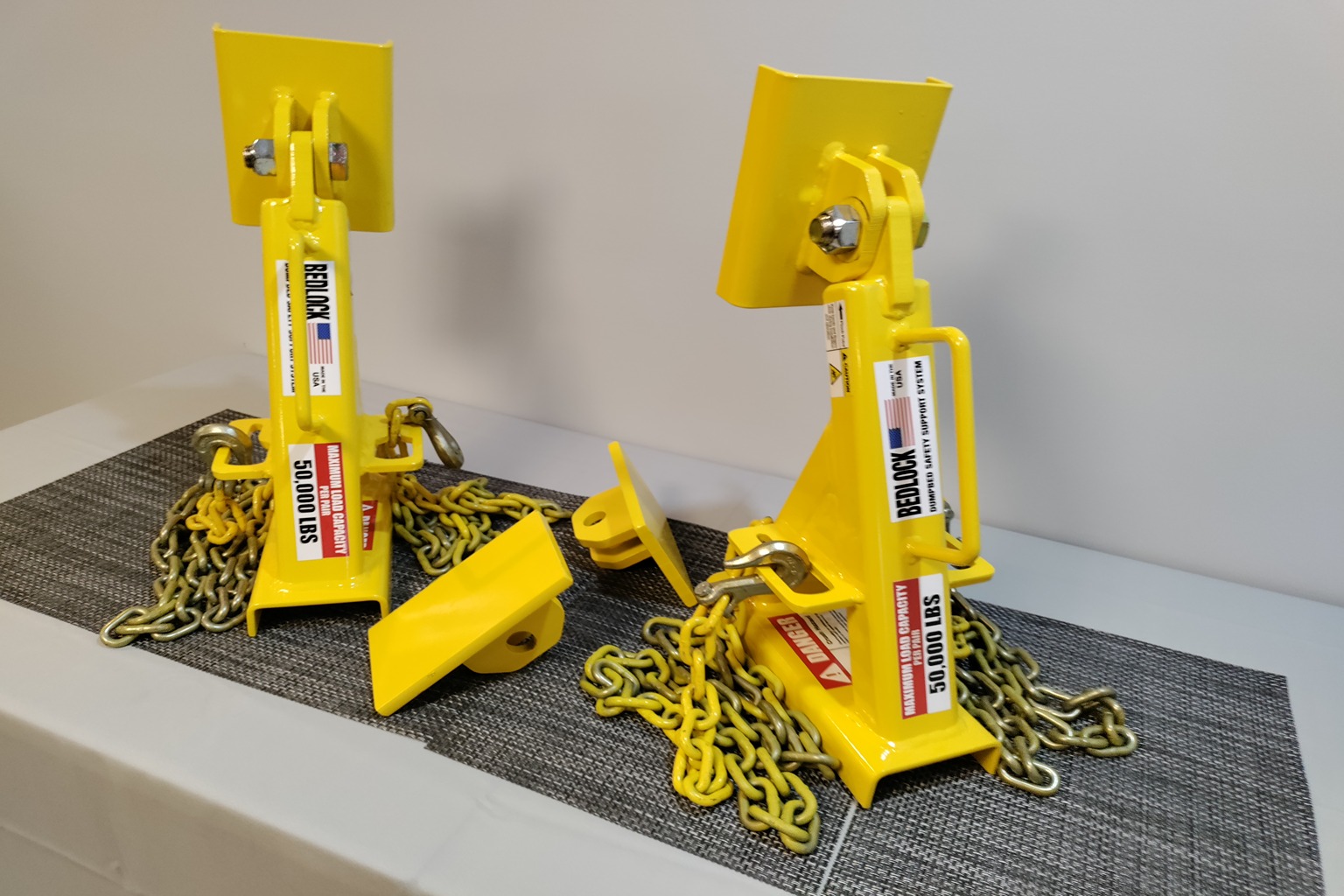
BedLock Safety Products, LLC manufactures dump truck safety stands for single- and tandem-axle dump trucks, as well as compatible trailers and roll-offs.
The company’s BL-450A/B, for example, is designed for frames up to 4.5 inches wide and is commonly used with single- and tandem-axle dump trucks. This makes frame measurement an important part of determining whether the configuration is appropriate for a particular truck.
For applications involving wider frames, BedLock also offers the BL-600A/B, designed for frames up to 6 inches wide. It is commonly used with larger dump trailers and roll-offs, including refuse and recycling applications.
The important distinction is that these products are selected based on the vehicle’s specifications and intended repair application, not simply because a truck is classified as single-axle or tandem-axle.
What About Trucks With Limited Frame Access?
Axle configuration is only one part of the equation. Some trucks have additional equipment mounted around the frame that can make a standard support configuration difficult to use.
Battery boxes, air tanks, brackets, and other bolted or welded components may limit access to the frame at the intended support location. In these cases, a repair team may need to consider a configuration designed around the available space.
BedLock offers the BLN-450A/B Notched BedLock as a made-to-order option for applications where mounted equipment limits normal frame access. The shortened base-plate side and reinforced supports are intended for specific vehicle configurations where a standard setup may not provide the required access.
This is why taking measurements before selecting equipment can save a repair facility from discovering a compatibility issue after the truck is already in the maintenance bay.
Is the Repair Process Completely Different for Tandem-Axle Trucks?
Not necessarily.
The basic maintenance principles remain the same. Technicians still need to follow the truck manufacturer’s procedures, secure the vehicle appropriately, inspect the relevant components, and use the required support equipment when working beneath a raised body.
What changes is the specific configuration being serviced.
A tandem-axle truck may have additional components or different spacing around the chassis. A single-axle truck may provide a different arrangement of accessible components. Neither configuration should automatically be treated as interchangeable simply because both are dump trucks.
A useful approach is to think of axle configuration as one of the first identifiers, followed by a more detailed assessment of the truck’s dimensions and equipment.
Why Should Mixed Fleets Use Application-Based Selection?
For a repair facility handling a mixed fleet, standardizing the inspection process can make equipment selection easier.
Instead of asking only, “Is this a single-axle or tandem-axle truck?” teams can record the measurements and conditions that actually affect support selection. This can include frame width, frame profile, body configuration, clearance, and any mounted equipment around the intended support location.
This information can also make conversations with equipment manufacturers more productive. Rather than relying on a general vehicle description, repair professionals can provide the details needed to identify an appropriate support configuration.
Choose Support Equipment Based on the Truck in Front of You
Single-axle and tandem-axle dump trucks share many of the same basic maintenance requirements, but their chassis layouts, component arrangements, and available working space can differ. For repair teams, the safest approach is to evaluate the actual vehicle instead of selecting equipment based solely on axle configuration.
At BedLock Safety Products, LLC, we manufacture truck repair safety equipment for dump truck maintenance and repair applications. We recommend providing our team with the truck’s frame dimensions, configuration, and any clearance limitations before selecting a BedLock System. We can help identify the appropriate option for the application and provide a firm freight cost before an order is placed.
Reach out to our team today.