A technician finishes inspecting a dump truck and checks a box on a paper form. The clipboard is placed on a desk, another repair begins, and weeks later no one remembers where that inspection record went. It is a simple scenario, yet missing documentation can create confusion, delay maintenance decisions, and make it difficult to demonstrate that safety procedures were followed.
Digital recordkeeping is changing that.
Today’s fleet managers are moving beyond paper files to centralized maintenance systems that organize inspections, track equipment usage, and improve accountability. While software cannot replace safe work practices or dependable mechanical protection, it can strengthen maintenance safety compliance by ensuring critical information is accurate, accessible, and easy to review.
According to the 2024 Fleet Technology Trends Report published, 69% of surveyed fleet professionals said improving operational efficiency is a top priority, while increasing numbers of organizations are investing in digital tools to improve maintenance planning and asset management. As maintenance operations become more data-driven, digital records are playing a larger role in supporting safer workplaces.
Why Paper Records Are No Longer Enough
Paper forms have served maintenance departments for decades.
However, they present several challenges:
- Documents can be misplaced.
- Handwritten notes may be difficult to read.
- Inspection histories become difficult to search.
- Multiple versions of the same document may exist.
- Tracking recurring issues requires significant manual effort.
These limitations make it harder for supervisors to identify maintenance trends or verify that inspections were completed consistently.
Digital systems solve many of these challenges by keeping maintenance information in one secure location.
What Are Digital Maintenance Records?
Digital maintenance records are electronic files that document vehicle inspections, equipment checks, repairs, technician notes, and maintenance schedules.
Instead of relying on filing cabinets or paper checklists, organizations can access maintenance histories through computers, tablets, or mobile devices.
Common records include:
- Vehicle inspection reports
- Preventive maintenance schedules
- Equipment inspection logs
- Technician certifications
- Safety checklists
- Repair histories
- Parts replacement records
- Incident documentation
These records provide a complete picture of maintenance activities throughout the life of each vehicle.
Supporting Better Maintenance Safety Compliance
One of the greatest advantages of digital recordkeeping is consistency.
Maintenance managers can establish standardized inspection forms that every technician completes using the same process.
This approach improves maintenance safety compliance by reducing inconsistencies between shifts, departments, or repair locations.
Digital platforms can also:
- Schedule recurring inspections
- Send reminders for upcoming maintenance
- Flag overdue safety checks
- Store completed inspection records
- Track corrective actions
- Generate compliance reports
These features help managers stay organized while reducing the possibility of overlooked inspections.
Making Equipment Tracking More Efficient
Heavy-duty maintenance facilities often manage dozens or even hundreds of safety devices.
Tracking inspection dates manually becomes increasingly difficult as operations grow.
Digital systems allow organizations to monitor:
- Inspection frequency
- Service history
- Equipment condition
- Replacement schedules
- Assigned locations
- Usage frequency
This information helps maintenance teams ensure that critical truck repair safety equipment remains available and ready for daily use.
Documentation Supports Smarter Decisions
Maintenance decisions should rely on evidence rather than assumptions.
When inspection histories are readily available, managers can identify recurring problems more quickly.
For example, digital records may reveal:
- Equipment requiring frequent repairs
- Vehicles experiencing repeated hydraulic issues
- Components reaching the end of their service life
- Areas where additional technician training is needed
Having immediate access to historical data allows organizations to respond proactively instead of waiting for larger problems to develop.
Technology Cannot Replace Physical Safety Equipment
Digital tools improve documentation.
They do not physically protect technicians.
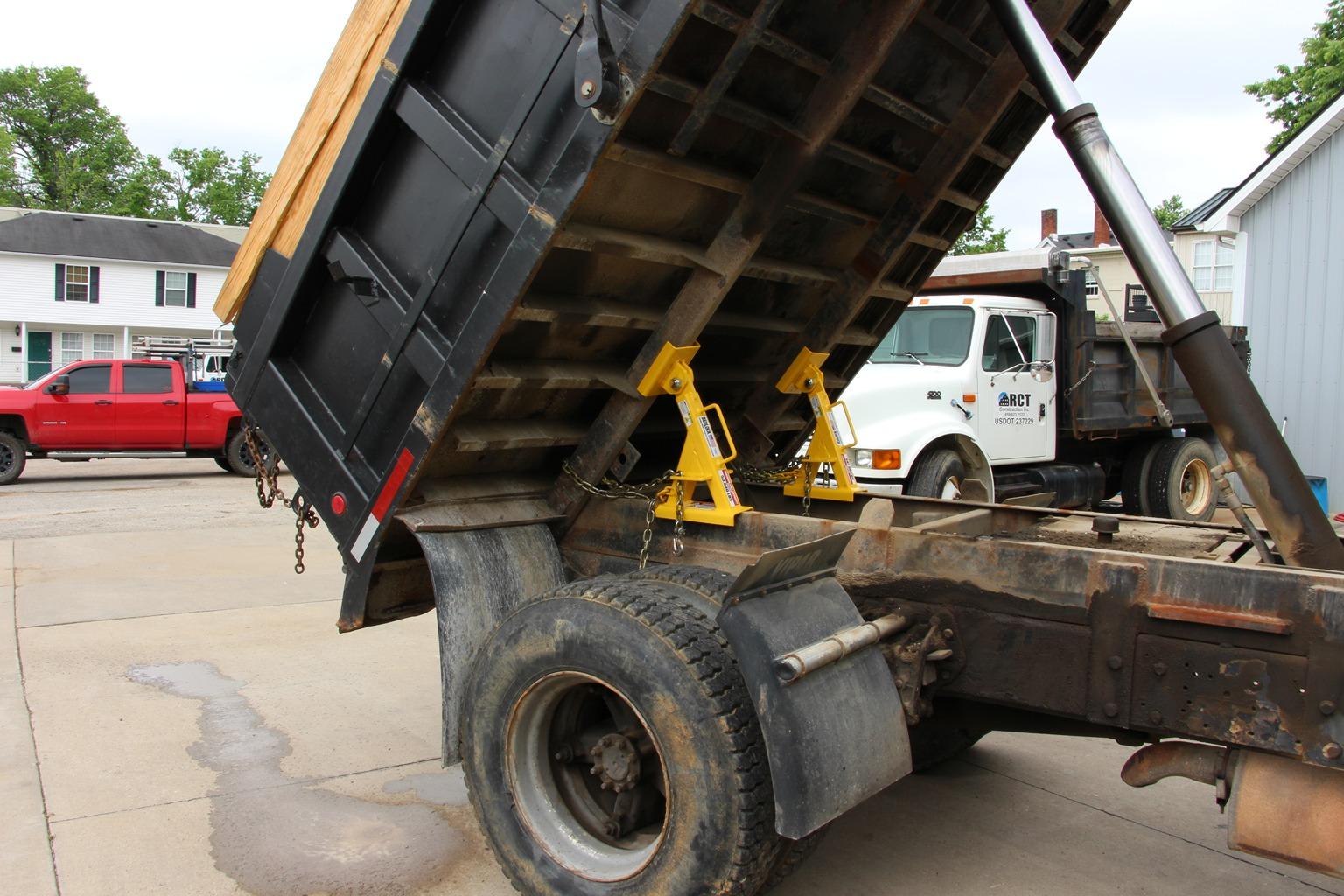
Electronic inspection records cannot prevent a raised dump body from falling.
Maintenance software cannot replace dependable equipment body props or other engineered mechanical safeguards.
Technology supports decision-making.
Reliable safety equipment supports the people performing the work.
The strongest maintenance programs combine both.
Digital systems verify procedures have been completed, while certified physical equipment helps protect technicians during maintenance activities.
Integrating Equipment Inspections Into Digital Workflows
Organizations should include every major piece of safety equipment within their digital inspection process.
Inspection records may include:
- Serial numbers
- Inspection dates
- Technician observations
- Maintenance performed
- Replacement history
- Photographs
- Corrective actions
Keeping these records electronically simplifies long-term equipment management.
It also creates consistent documentation that supervisors can review at any time.
Tracking Dump Truck Safety Stands and Other Safety Equipment
Many repair facilities use multiple types of protective equipment across different vehicles.
Digital asset tracking helps ensure dump truck safety stands, mechanical supports, lifting devices, and inspection tools receive routine attention.
Managers can quickly determine:
- Which equipment has been inspected
- Which items require maintenance
- Where equipment is currently assigned
- When replacements should be ordered
This level of organization becomes increasingly valuable as fleets continue expanding.
How BedLock Equipment Fits Into Digital Documentation
Mechanical safety equipment should become part of the same documentation process used for vehicles.
BedLock Safety Products recommends incorporating routine inspections of truck bed support systems into digital maintenance programs.
Organizations can record:
- Equipment identification numbers
- Inspection frequency
- Visual condition
- Maintenance performed
- Technician verification
- Service history
Maintaining electronic inspection records helps demonstrate that equipment is being monitored according to company procedures.
It also simplifies future planning for maintenance and replacement.
Encouraging Accountability Through Digital Records
Digital documentation benefits everyone within the organization.
Technicians understand exactly what must be inspected.
Supervisors can verify completed work.
Fleet managers gain visibility across multiple locations.
Leadership receives measurable information for evaluating safety performance.
This transparency strengthens accountability while encouraging consistent maintenance habits.
When everyone follows the same documentation process, fewer details are overlooked.
Selecting the Right Digital Maintenance Platform
Every organization has different operational requirements.
When evaluating maintenance software, managers should consider:
- Ease of use
- Mobile accessibility
- Inspection customization
- Asset tracking capabilities
- Reporting functions
- User permissions
- Integration with existing fleet systems
- Data security
The goal is not simply adopting new technology.
It is creating a system that technicians will use consistently.
Simple processes often produce the best long-term results.
Combining Technology With Proven Safety Practices
Digital maintenance systems represent an important advancement in fleet management.
However, successful organizations recognize that technology complements, not replaces, physical safety measures.
Routine inspections, standardized procedures, technician training, dependable equipment body props, quality truck repair safety equipment, and properly maintained dump truck safety stands remain fundamental parts of every maintenance program.
Digital records simply make those efforts easier to organize, verify, and improve over time.
As fleets continue modernizing their operations, organizations that combine technology with reliable safety equipment will be better positioned to maintain compliance, reduce operational risk, and support safer maintenance environments.
Strengthen Maintenance Safety Compliance With BedLock Safety Products LLC
Digital records are most effective when paired with dependable physical safety solutions. At BedLock Safety Products LLC, we manufacture reliable truck repair safety equipment, durable equipment body props, and trusted solutions that complement your maintenance safety compliance program.
By incorporating BedLock equipment inspections and usage records into your digital maintenance documentation, your organization can build stronger accountability, improve equipment tracking, and support safer maintenance practices.
Connect with us today to learn how our engineered safety products can become an integral part of your fleet’s maintenance management strategy.