There was a time when choosing equipment for a truck repair could feel refreshingly predictable. Find the truck, grab the usual equipment, and get to work.
Then the truck gets modified.
A new body is installed. An air tank takes up space along the frame. A hydraulic component is added. A toolbox appears where nobody remembers ordering one. Suddenly, the support equipment that worked perfectly on the last truck may not be the right choice for this one.
That is the reality of modern fleet maintenance. Trucks are built for specific applications, modified throughout their service lives, and often configured very differently from one another.
For repair teams, that makes equipment selection more than a purchasing decision. It is part of preparing the repair itself.
When choosing dump bed safety support, several factors deserve attention, including frame dimensions, truck configuration, clearance, rated capacity, equipment condition, and the type of work being performed.
The good news? The process does not have to be complicated. It just needs to start with the right questions.
Why the Truck Should Drive the Decision
The easiest mistake to make is choosing support equipment based on what has worked before.
Familiarity feels efficient. Sometimes it is. But when truck configurations vary, familiarity can quickly turn into assumption.
A single-axle dump truck may have different frame dimensions from a tandem-axle model. A dump trailer is not configured like a truck-mounted dump body. A roll-off may have an entirely different arrangement around the frame. A vocational truck may have additional equipment installed specifically for the work it performs.
OSHA guidance concerning maintenance beneath raised dump bodies emphasizes the importance of positive support when workers need to work beneath a raised body and recognizes that standard body props may not provide suitable access for every maintenance situation.
That means support equipment should be selected according to the actual vehicle and repair application, not simply its general category.
Start With the Frame
Frame dimensions provide one of the clearest starting points for equipment selection.
The support system needs to work with the frame it is actually being used on. Guessing based on truck model or memory is not a substitute for checking the vehicle.
- Frame Dimensions:Verify the relevant frame measurements before selecting equipment. Even relatively small differences can affect how a support system fits and where it can be positioned.
- Frame Condition:Look for modifications, reinforcements, or other changes that may affect available contact areas or positioning.
- Available Space:Measure the space where the support system needs to be installed rather than assuming that an apparently open frame area is usable.
This is one of those situations where a measuring tape can save considerably more time than it takes to use one.
Truck Configuration Matters More Than It May Appear
Two dump trucks can perform similar jobs and still require different support considerations.
That is because vehicle configuration affects more than the size of the body. It can affect frame dimensions, support locations, available clearance, and the surrounding equipment installed on the chassis.
Single- and Tandem-Axle Trucks
These configurations can have different frame sizes and body arrangements. Support equipment should therefore be matched to the actual truck rather than selected simply because both vehicles are classified as dump trucks.
Dump Trailers and Roll-Offs
Trailers and roll-offs introduce additional structural and access considerations. Equipment that works for one type of dump application should not automatically be assumed appropriate for another.
Specialized Vocational Trucks
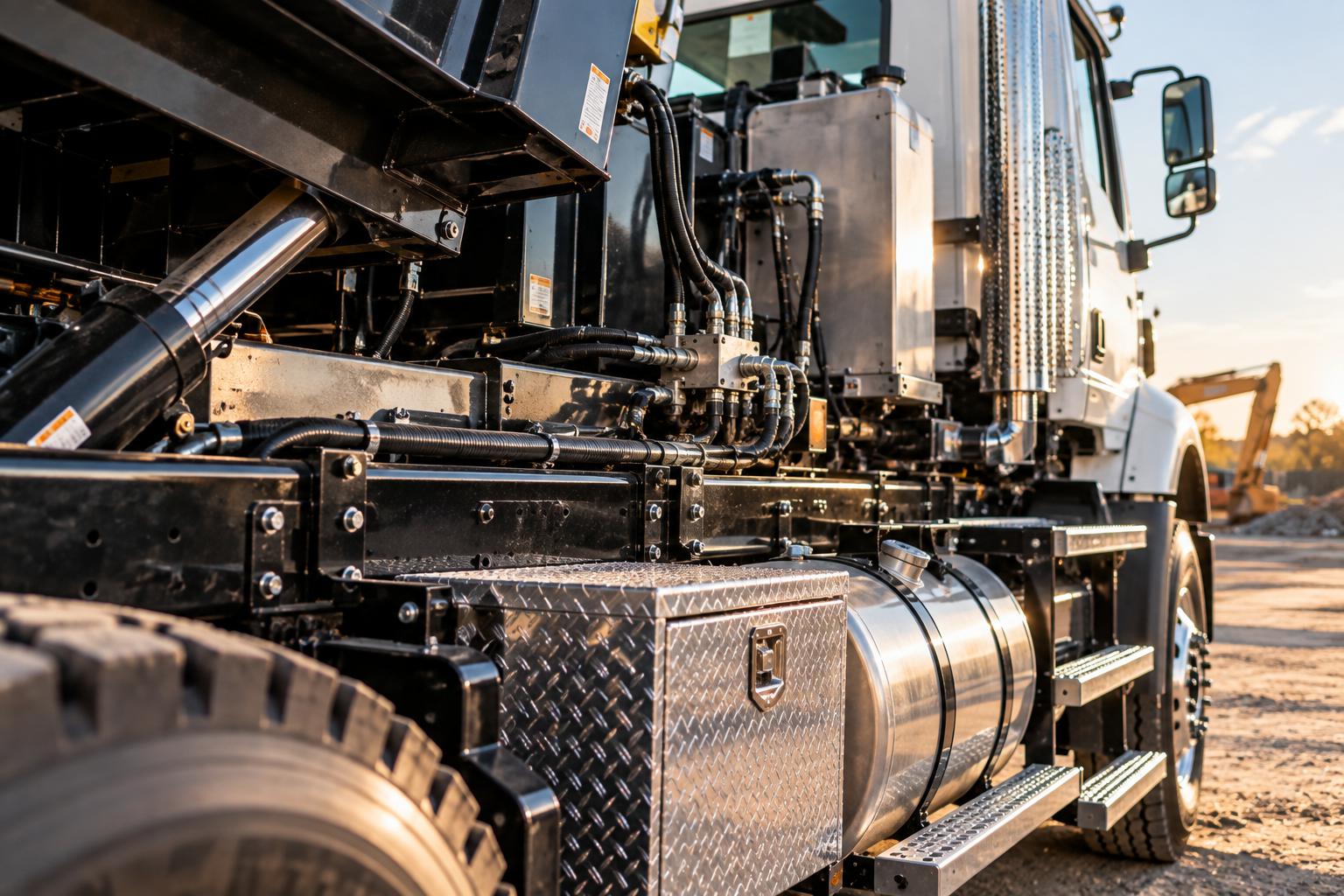
Vocational trucks can be particularly interesting from an equipment-selection standpoint because they are often customized for specific work. Additional tanks, hydraulic systems, brackets, toolboxes, or other devices can consume frame space and change the support requirements.
The more customized the truck, the more important it becomes to evaluate the actual configuration.
Clearance Can Change Everything
This is where equipment selection gets interesting.
A support system may have the appropriate capacity. It may even be designed for the general type of truck being serviced. But if another component is occupying the space needed for positioning, the equipment may not be suitable for that application.
Clearance needs to be considered before the repair begins.
- Frame Obstructions:Check for air tanks, battery boxes, hydraulic components, toolboxes, brackets, reservoirs, and other equipment that may interfere with support placement.
- Technician Access:Consider where technicians need to stand, reach, inspect, and perform the repair. Equipment should not create unnecessary access problems.
- Raised Body Position:Think about how the body needs to be positioned for the specific repair and how that position affects available working space.
- Restricted Areas:If a truck has unusually limited frame space, determine whether a different support configuration is required instead of trying to force a standard system into the available opening.
Clearance is not merely a convenience. It can determine whether the selected equipment is practical for the job at all.
Rated Capacity Is Only One Piece of the Puzzle
Capacity is an important specification. It should never be ignored.
But selecting support equipment based solely on the largest capacity number available is not a particularly sophisticated strategy.
A support system still needs to fit the application, work with the truck’s configuration, and be positioned as intended.
Think about it this way: the strongest tool in the shop is not automatically the right tool for every repair.
- Rated Capacity:Confirm that the equipment is rated appropriately for the intended application.
- Application:Consider how the equipment is designed to be used and whether that matches the repair situation.
- Fit and Positioning:Capacity does not compensate for poor fit or unsuitable positioning.
- Overall Compatibility:Frame dimensions, clearance, vehicle configuration, and capacity should all make sense together.
The goal is not simply to find equipment with a large rating. The goal is to find equipment that appropriately matches the application.
The Repair Itself Should Influence Equipment Selection
Here is a factor that can easily get overlooked: what exactly are the technicians going to do?
The answer matters.
A routine inspection may require one type of access. Hydraulic work may require another. Mechanical repairs, electrical work, and structural repairs can each place technicians in different areas beneath the raised body.
Support equipment should be considered as part of the repair plan rather than treated as an unrelated piece of shop equipment.
- Inspection Work:Consider where technicians need visibility and access.
- Mechanical Repairs:Determine which components need to be reached and whether the support arrangement leaves appropriate working room.
- Hydraulic Repairs:Consider access around cylinders, lines, fittings, and associated components.
- Structural Work:More extensive repairs may require additional planning around body position, support placement, clearance, and technician access.
A good equipment decision answers two questions at once: “Will it fit the truck?” and “Will it work for the repair?”
Familiar Equipment Can Create False Confidence
There is a natural tendency in busy repair shops to repeat what worked last time.
That is understandable. Technicians have enough to think about without reinventing every process for every truck.
But trucks evolve.
A body may be replaced. A component may be relocated. Additional equipment may be mounted to the frame. A different truck may arrive that looks almost identical but has different dimensions.
That is why established procedures should include verification when the vehicle or application changes.
- Check for Modifications:Do not assume the truck is still configured the way it was when equipment was originally selected.
- Maintain Vehicle Information:Keeping useful frame and clearance measurements can make future decisions faster.
- Reassess New Applications:If the repair or vehicle configuration is different, take another look at the support requirements.
Consistency should make the process safer and easier. It should not eliminate good judgment.
Choose the System That Fits the Application
Truck configurations are not becoming more uniform. If anything, fleets and vocational applications continue to create more variation.
That makes thoughtful equipment selection increasingly important.
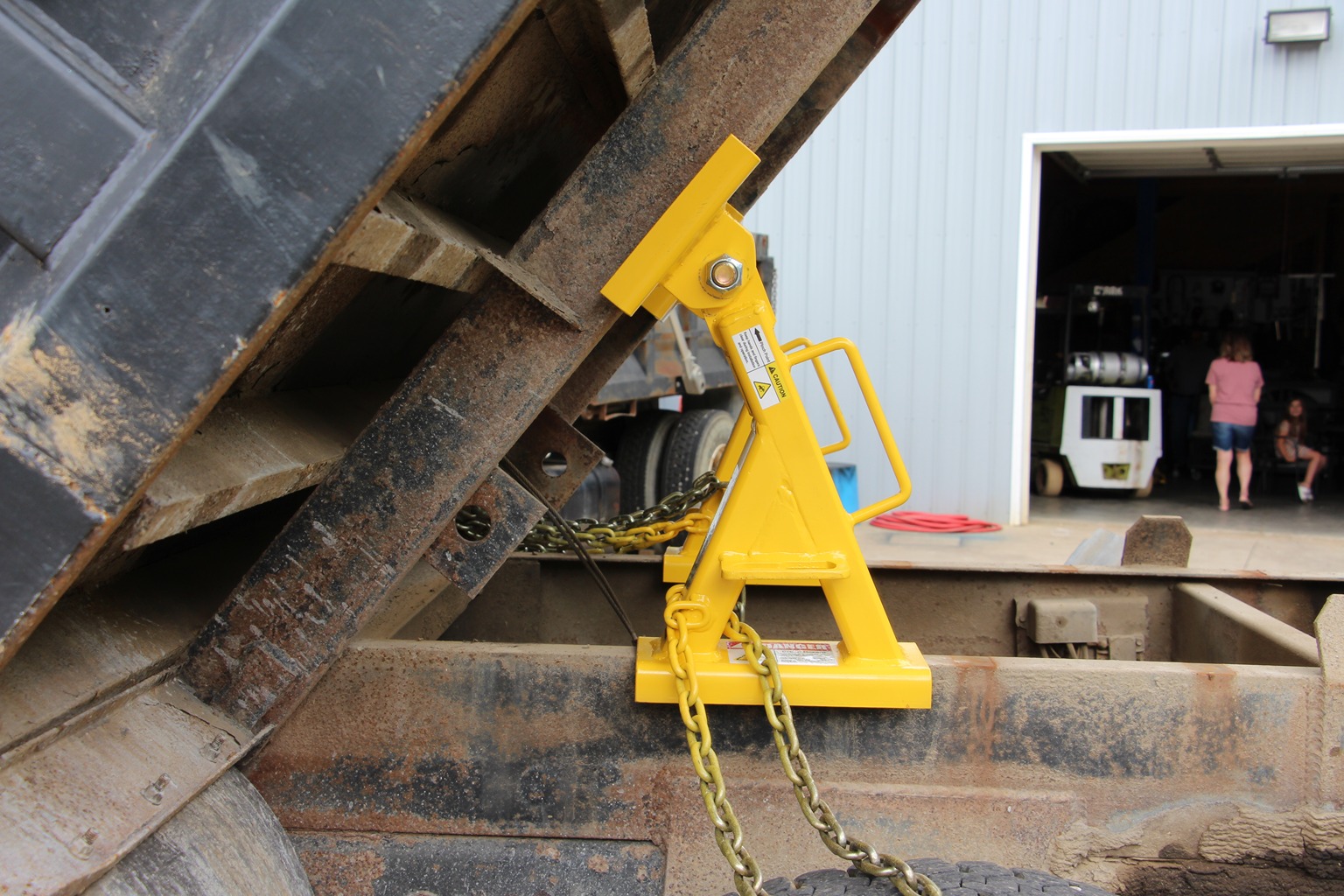
At BedLock Safety Products, LLC, we understand that different trucks can present very different support requirements. We provide truck repair safety equipment for applicable repair-shop use and offer BedLock Systems designed for different frame dimensions and truck configurations.
Our team can review the specifics of a customer’s application and help identify an appropriate BedLock System, including options for trucks where limited frame space creates additional challenges.
If your shop is dealing with changing truck configurations, restricted frame space, or questions about the right support equipment, contact us at BedLock Safety Products, LLC. We can help you identify the appropriate BedLock System for your application and provide firm freight costs.