Fleet managers face constant pressure to keep vehicles operating, repair schedules moving, and maintenance costs under control. Yet one overlooked issue can disrupt every operational goal—shop accidents. While injuries are often viewed as isolated incidents, their financial and legal consequences can affect an organization for years.
The reality is that industrial shop safety liability extends far beyond immediate medical expenses. A single workplace accident involving a raised dump bed or failed support system can trigger lawsuits, operational delays, insurance increases, regulatory scrutiny, and lasting damage to employee confidence.
For repair facilities and fleet operators, safety investments are not simply protective measures—they are business decisions.
The Financial Impact of Shop Injuries
Most workplace injuries create a chain reaction of expenses that reach well beyond the original event.
Direct costs may include:
- Emergency medical treatment
- Hospital care and rehabilitation
- Workers’ compensation claims
- Equipment damage
- Investigation expenses
These are only the visible losses.
Indirect costs often become even more significant and may involve:
- Lost productivity
- Overtime expenses
- Vehicle downtime
- Missed deadlines
- Hiring temporary labor
- Administrative disruptions
When heavy-duty repair facilities experience accidents, the financial consequences multiply quickly.
A single serious injury can impact maintenance schedules across an entire fleet operation.
Why Fleet Managers Carry Significant Responsibility
Fleet managers are increasingly involved in workplace safety decisions because maintenance risks directly affect operations and liability exposure.
When technicians work around heavy machinery, hydraulic systems, or raised dump beds, management is expected to establish safe procedures and provide dependable truck safety equipment.
Courts, insurers, and regulatory agencies frequently examine whether employers:
- Identified workplace hazards
- Implemented safety policies
- Provided proper training
- Supplied adequate protective equipment
- Enforced maintenance safety procedures
Failure in these areas may increase legal exposure and strengthen negligence claims following an accident.
This is where industrial shop safety liability becomes a leadership issue—not simply a maintenance concern.
The Hidden Costs of Crushing Accidents
Few repair incidents create greater consequences than crushing accidents involving raised dump beds.
Hydraulic systems can fail unexpectedly because of:
- Hose deterioration
- Pressure loss
- Mechanical wear
- Improper maintenance
- Accidental activation
- Load shifting
When technicians work beneath unsupported or improperly supported beds, the results can be catastrophic.
Crushing injuries frequently lead to:
- Permanent disability
- Long-term rehabilitation
- Fatalityinvestigations
- Litigation exposure
- Regulatory penalties
Beyond financial loss, these incidents leave lasting emotional and operational consequences within the workforce.
Employees remember serious accidents long after claims are closed.
Insurance Costs and Rising Risk Profiles
Insurance carriers pay close attention to safety records.
Repair facilities with repeated incidents often face:
- Increased premiums
- Reduced coverage flexibility
- Greater deductibles
- More intensive inspections
- Higher claim scrutiny
A poor safety history creates long-term operational costs.
Insurers evaluate whether businesses maintain proactive risk-management systems or operate reactively after incidents occur.
Facilities using dependable truck repair safety equipment and documented procedures frequently demonstrate stronger risk control practices.
This proactive approach can support healthier insurance relationships and improved long-term cost management.
The Productivity Problem Few Companies Measure
Accidents not only harm injured employees—they interrupt workflow across the shop.
When incidents occur, operations often slow down immediately.
Common disruptions include:
- Work stoppages
- Investigation requirements
- Equipment isolation
- Schedule delays
- Technician reassignment
- Increased supervisory oversight
Even technicians who were not directly involved may work more cautiously afterward, reducing overall productivity.
This disruption creates a hidden cost that rarely appears on injury reports.
The longer recovery and investigation periods last, the more difficult it becomes to maintain operational consistency.
Reputation and Workforce Stability Matter
A company’s safety reputation affects far more than compliance.
Technicians want to work in facilities where they feel protected and respected.
When accidents occur repeatedly or unsafe practices become normalized, employee trust begins to decline.
This can contribute to:
- Higher turnover
- Reduced morale
- Hiring challenges
- Lower productivity
- Declining workplace engagement
Skilled technicians increasingly evaluate workplace safety when considering employment opportunities.
Organizations with stronger safety cultures often experience better workforce retention and operational stability.
Protecting employees protects the business itself.
Reactive Safety Is Expensive Safety
Many organizations unintentionally adopt reactive safety models.
In these environments, improvements happen only after incidents occur.
Repairs continue with outdated procedures or improvised supports until something goes wrong.
This approach increases industrial shop safety liability because hazards remain unmanaged.
Reactive safety creates several problems:
- Unpredictable risk exposure
- Inconsistent procedures
- Greater human error
- Higher liability potential
- Poor safety culture
A proactive approach produces different results.
Instead of responding to accidents, proactive facilities prevent them.
How BedLock Products Function Like Preventive Risk Protection
Fleet managers routinely purchase insurance to manage risk exposure.
Yet insurance only responds after damage occurs.
Preventive safety equipment works differently—it helps stop incidents before they happen.
This is where BedLock Safety Products LLC delivers measurable value.
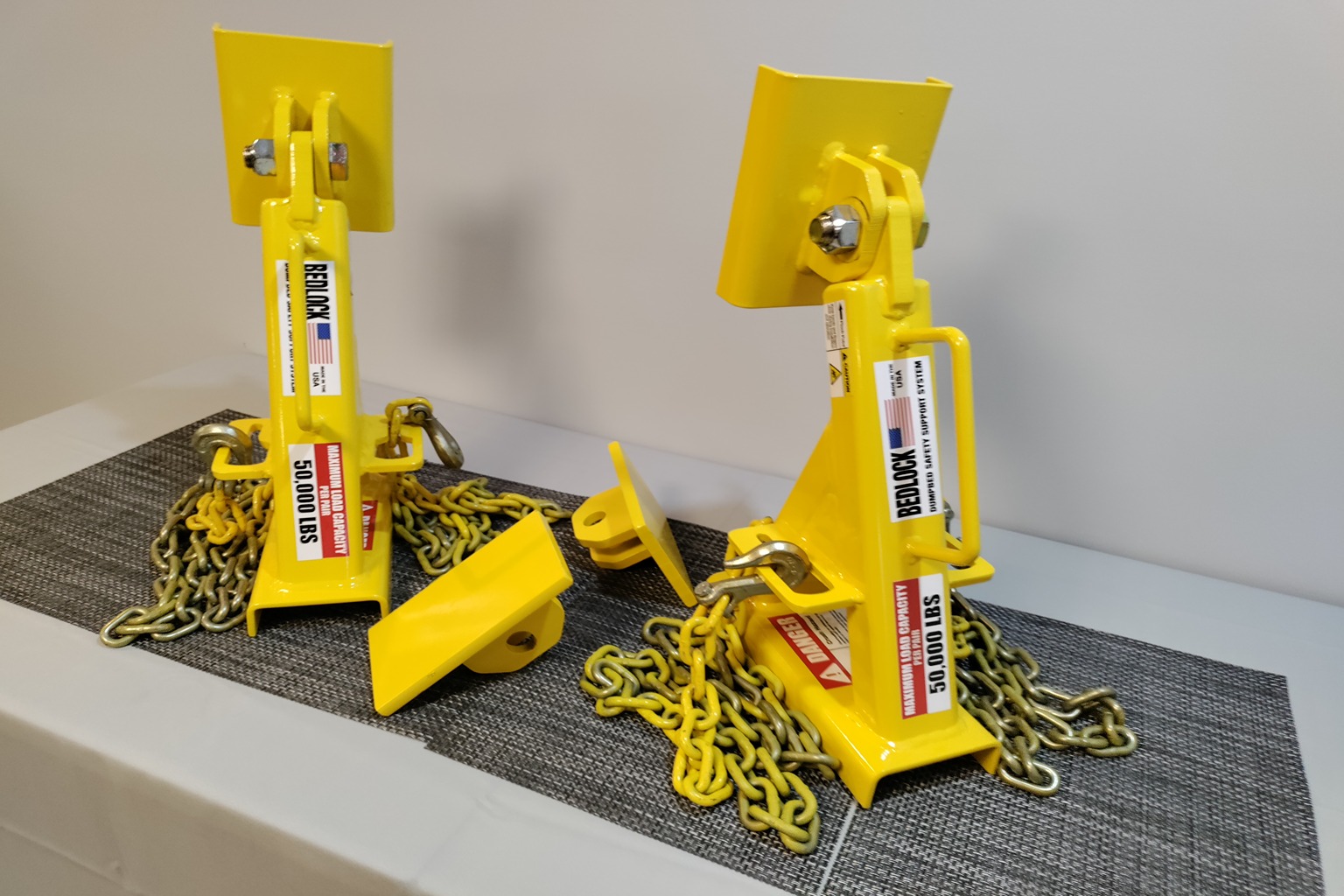
Their engineered truck bed locks act as a practical layer of risk protection by providing dependable dump bed safety support during maintenance.
Rather than relying on unstable props or hydraulic pressure alone, technicians gain physical protection designed specifically for raised-bed repair conditions.
This proactive protection helps reduce both injury risk and business exposure.
How BedLock Safety Products Supports Safer Operations
BedLock Safety Products LLC manufactures engineered truck safety products designed for real repair environments.
Each system provides structured support for raised dump beds while helping facilities strengthen maintenance safety practices.
BL-450 A/B
These systems support standard repair work and routine maintenance procedures.
The BL-450 A/B is widely used because of its dependable stabilization and practical deployment.
BL-600 A/B
Larger vehicles and heavier service conditions demand stronger support.
These models provide additional durability and increased structural capacity.
BL-700 A/B and BL-800 A/B
High-capacity fleets require enhanced stabilization.
The BL-700 A/B includes a 7-inch base while the BL-800 A/B features an 8-inch base, providing greater support for demanding maintenance conditions.
BLN-450 A/B Notched BedLock
Modified truck frames and restricted access areas present unique challenges.
The BLN-450 A/B uses a shortened base and reinforced design to safely accommodate these configurations.
Together, these systems help facilities standardize dump truck bed safety stands and improve consistency during repairs.
Safety Investments Protect More Than Equipment
Some organizations hesitate to invest in engineered safety systems because they focus only on upfront costs.
This perspective overlooks the larger picture.
The cost of one preventable accident often exceeds years of preventive investment.
Reliable truck bed locks support:
- Technician protection
- Reduced downtime
- Lower liability exposure
- Improved safety culture
- Greater operational consistency
This makes safety equipment a strategic business investment—not simply a maintenance expense.

Fleet managers carry responsibility that extends beyond vehicles and schedules. They are also responsible for protecting employees and managing risk across the repair environment.
The true cost of shop accidents includes financial loss, operational disruption, legal exposure, and long-term workforce consequences.
Reducing industrial shop safety liability requires proactive planning, dependable procedures, and engineered truck safety equipment that helps prevent catastrophic failures before they occur.
BedLock Safety Products LLC provides dependable truck bed locks that function as practical risk-management tools—protecting both a company’s bottom line and its most valuable asset: its people.
Contact us today to explore safer maintenance solutions for your fleet.