Walk through any busy shop, and you will rarely see two identical trucks. Different makes, body styles, and frame setups all roll in on the same day.
That variety is exactly what makes dump truck repair safety tricky. A routine that suits one truck may not fit the next. This guide explains how to keep practices consistent while still respecting each truck’s design.
Shops often service dump trucks, trailers, roll-offs, and vocational vehicles side by side. One clear standard helps every technician work the same safe way on all of them.
Why Mixed Fleets Are Harder to Maintain Safely
Variety shows up in many places:
- Makes and models:Each manufacturer builds differently.
- Body styles:Dump trucks, dump trailers, and roll-offs all behave differently.
- Frame configurations:Widths and mounted equipment change what fits.
- Operating environments:Where a truck works affects wear and condition.
Without a shared standard, each technician fills the gaps with personal habit. One reaches for a prop, another for a block, and a third for whatever is closest.
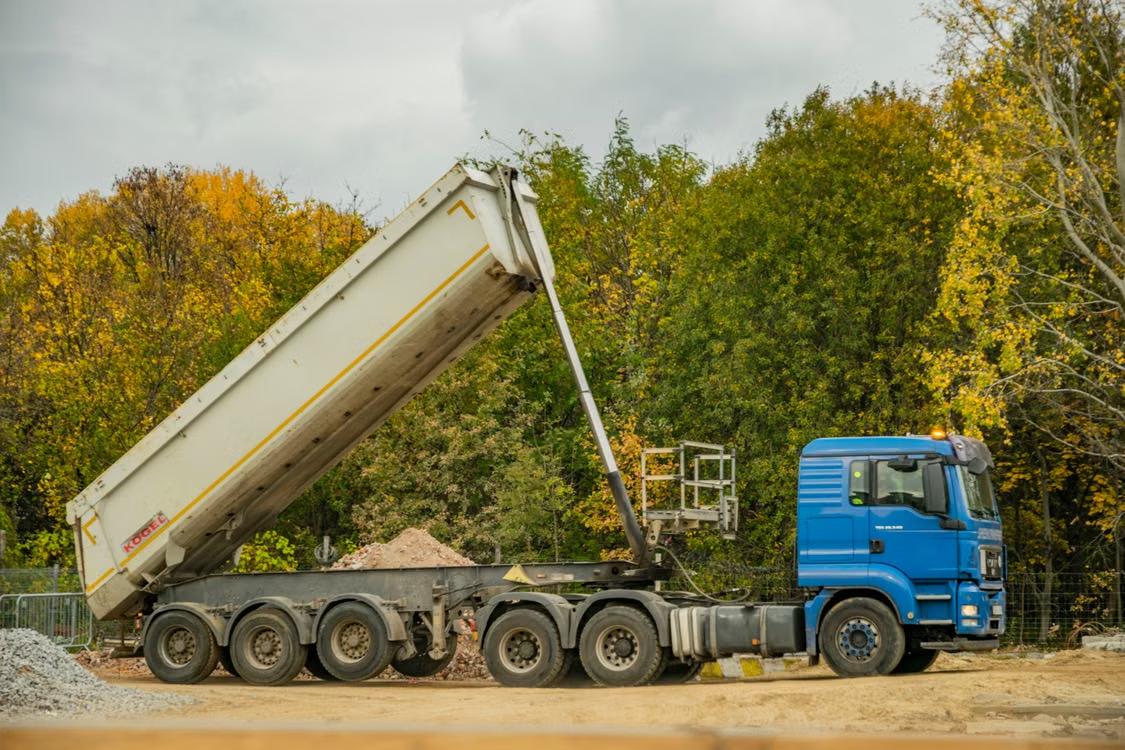
Some trucks arrive with built-in support. Others do not. A California FACE report notes that one truck model lacked installed devices to hold the bed up, so a portable jack stand was needed.
Even built-in props have limits. OSHA’s bulletin on dump bed hazards notes that body props are non-adjustable and support the body at one position only.
Build One Standard That Fits Every Truck
Variety in trucks does not require variety in principles. Split your standard into two parts.
What Never Changes
Some rules apply to every truck, every time:
- Mechanically support the raised bed before anyone goes underneath
- Never depend on hydraulics to hold the load
- Use the manufacturer’s safety device when one is provided
- Follow the manufacturer’s blocking procedures before repairs begin
- Never work alone where no one can see or hear you
These rules hold because the hazard does not change. A raised bed is a raised bed, whatever badge is on the cab. An MSHA fatality report lists the manufacturer-device, blocking-procedure, and hydraulics points among its corrective procedures.
What Flexes
Other details can adapt to the truck:
- The size and type of support equipment
- Where the support attaches
- The access path around the body style
For instance, a truck with crowded frame space may need a different support than one with a clear frame.
Strong dump truck repair safety keeps the first list fixed and the second list flexible. Technicians then know what is up for judgment and what is not.
Document Truck-by-Truck Differences
A simple profile sheet for each truck prevents guesswork. Include:
- Make, model, and body type
- Frame width
- Chassis-mounted equipment that blocks access
- Whether an onboard prop is installed
- The approved support for that truck
Keep the sheet where technicians can find it. Update it when a truck is modified.
A profile sheet turns a guess into a lookup. It also supports dump truck repair safety on busy days, when no one has time to measure a frame from scratch.
Where BedLock Supports a Standardized Process
BedLock Safety Products, LLC makes truck repair safety equipment for dump bed maintenance. BedLock systems hold a raised dump bed upright so technicians can clean, repair, and maintain the truck. They are made for repair-shop use, not for cargo hauling or on-road use.
The range covers many frame sizes:
- BL-450A/B:Frames up to 4½”, with an “A” or “B” top.
- BL-600A/B:Frames up to 6″, including wider dump trailers and roll-offs.
- BL-700B and BL-800B:Frames up to 7″ and 8″, B top only.
- BLN-450A/B:A made-to-order notched version for trucks with limited frame access.
Each unit uses two chains and hooks with a double key slot retention plate. The BL-450A/B is the most popular size for repair shops, so it is a common starting point for fleets with typical frames. When bolted-on or welded equipment limits frame access, the notched model gives technicians an option made for that exact problem.
Using one family of dump truck safety stands across the fleet keeps the procedure the same, even when the truck changes.
Train and Review Together
A standard only works when everyone knows it. Train technicians on every truck type in the fleet. Review the profile sheets regularly. Ask the team where the process feels awkward. Useful habits include:
- Walking new hires through each truck type
- Reviewing any near miss as a team
- Refreshing the standard when a new truck type joins the fleet
Team input keeps dump body safety practical, not theoretical.
Quick Standard Checklist
- Profile sheet checked for this specific truck
- Approved support on hand and inspected
- Manufacturer instructions reviewed
- Team briefed on roles and signals
- Walkways clear around the truck
- Bed mechanically supported before anyone goes under
Find the Right BedLock System for Your Fleet
At BedLock Safety Products, we manufacture unique dump truck safety equipment for repair shops. Because every fleet is different, we do not want customers guessing which system fits each truck.
Contact us with your truck details and frame widths. Our team can recommend the appropriate BedLock system and provide a firm freight cost before your order is finalized. The team also takes custom order requests when a standard size does not fit. Reliable dump truck repair safety starts with the right match.